


Body + Mind is reader-supported. We may earn an affiliate commission when you buy through some of the links on our site.
VO2 max measures how efficiently your body uses oxygen during exercise, making it a useful snapshot of your cardio fitness. Your score can vary by age, gender, activity level and overall health, so it’s best to compare it with ranges that match your profile.
Devices like the Apple Watch can estimate VO2 max and show trends over time, but lab testing is still more precise. If you want to increase VO2 max, regular aerobic exercise, interval training and proper recovery may help improve your score over time.

VO2 max is a go-to metric for anyone interested in tracking cardio fitness, especially since most devices now compare it by age and gender. When my Apple Watch revealed my score was below average for my age, I was a bit disheartened. However, after some advice from a friend who’s monitored her VO2 max by age while training as a runner, I learned this is a metric you can actively improve with a solid workout routine.
Maybe you vaguely recall hearing about VO2 max in health class years ago but don’t know how it connects to your workout routines today. If you already track steps, distances, miles, calories or other metrics, do you need to also pay attention to VO2 max?
According to exercise physiologist and visiting professor at Grand Valley State University in Michigan, Todd Buckingham, Ph.D., “VO2 max is the amount of oxygen that you can breathe in, transport to the muscle and use during maximal exertion and aerobic exercise.” It is quantified in milliliters of oxygen consumed per minute per kilogram of body weight. The higher your number, the more aerobically fit you are.
The following factors can influence your VO2 Max score:

It depends on your age and gender. According to Dr. Buckingham, VO2 max naturally declines as you age.
“VO2 max tends to peak for men in their mid-to-late 20s. For women, it’s a little later, like early 30s. But after it reaches the peak, it tends to decrease,” he shares.
Another reason is age-related muscle loss.
“We tend to lose muscle mass and increase body fat percentage [as we get older]. Because fat does not have mitochondria and capillaries to turn oxygen into energy, we have metabolically inactive tissue,” he says.
An Apple Watch can estimate your VO2 max during three specific activities. It does so by analyzing workout-related metrics according to your age, sex, weight and medications. Some medicines can slow your heart rate, leading to an overestimation of your VO2 max.
The Apple Watch can show you trends and send you notifications of low readings. Because not all fitness trackers measure this metric, be sure to read the specs before purchasing one if tracking your VO2 max by age is one of the main reasons driving your decision.
Using my Apple Watch to estimate my cardio fitness with VO2 max has been eye-opening. I always thought VO2 max was a number reserved for elite athletes, not something an everyday person in my 30s could see. However, I was pleasantly surprised at how simple it was to check out my own stats using the Health app and a couple of brisk walks.
After a few weeks of tracking, my Apple Watch estimated my VO2 max at 40 ml/kg/min. The app helpfully let me know that puts me right around the good level for women my age. I’ll admit I was a little nervous to even peek at my number, half-expecting something embarrassingly low. However, seeing that I’m right on track gave me a confidence boost and made keeping active feel even more motivating.
One weekend, I decided to “put my VO2 max to the test” on my favorite local hiking trail. There’s this one part that’s all uphill and always leaves me huffing and puffing. Sure enough, by the time I got to the top, sweaty and out of breath, my watch buzzed to let me know I’d hit a new VO2 max high.
I couldn’t help but laugh at myself, feeling oddly proud that a piece of wearable tech and a challenging hill had come together to give me such a tangible sense of progress.
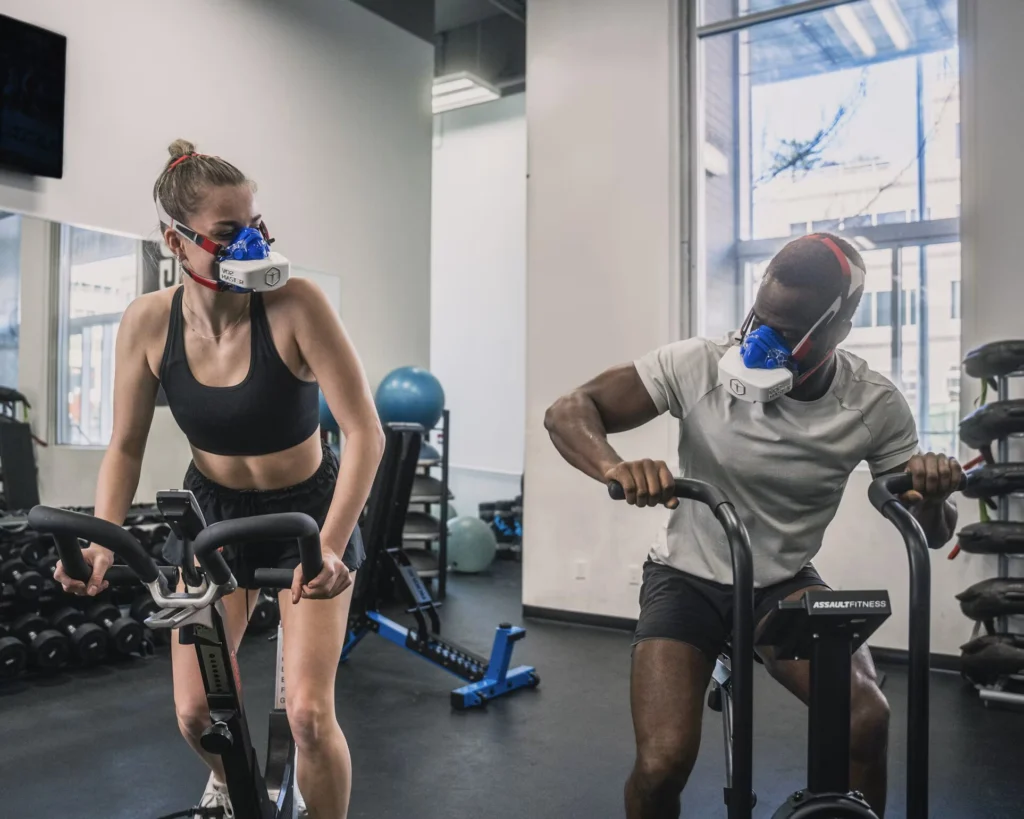
VO2 max scores can vary wildly, especially between non-athletes and elite athletes. For most of us, VO2 max is simply a way to gauge how efficiently our heart and lungs work during exercise. For pro athletes, though, it’s a key measure of high-level performance. Comparing the stats really highlights that difference. You’ll see just how exceptional elite athletes’ numbers are compared to the averages for everyday people.
Here’s how VO2 max breaks down for non-athlete women and men:
| NON-ATHLETE WOMEN | |||||
| Age | Poor | Fair | Average | Good | Excellent |
| <29 | <23.9 | 24-30.9 | 31-38.9 | 39-48.9 | 49 |
| 30-39 | <19.9 | 20-27.9 | 28-36.9 | 37-44.9 | 45 |
| 40-49 | <16.9 | 17-24.9 | 25-34.9 | 35-41.9 | 42 |
| NON-ATHLETE MEN | |||||
| Age | Poor | Fair | Average | Good | Excellent |
| <29 | <24.9 | 25-33.9 | 34-43.9 | 44-52.9 | 53 |
| 30-39 | <22.9 | 23-30.9 | 31-41.9 | 42-49.9 | 50 |
| 40-49 | <19.9 | 20-26.9 | 27-38.9 | 39-44.9 | 45 |
Elite athletes, on the other hand, routinely hit much higher numbers. For example, NBA players average 50–60 ml/kg/min, with some guards reaching the top of that range. Soccer player Cristiano Ronaldo has an estimated VO2 max of 75 ml/kg/min.
Swimmer Michael Phelps reportedly reached about 76 ml/kg/min, and cyclist Lance Armstrong’s VO2 max during his prime was reported as 83.8 ml/kg/min, which is extremely elite by any standard.

Yes, you can improve your VO2 max score. VO2 max, which measures your body’s ability to use oxygen during exercise, is not a fixed number. A large review published in 2024 found that people who followed regular cycling training routines, whether they focused on high-intensity intervals or steady exercise, saw clear improvements in their VO2 max. Consistent training really does raise your fitness level, no matter the exact type you choose.
The fastest way to boost your VO2 max is by doing high-intensity interval training (HIIT) or sprints. A study found that people who did HIIT, or other very hard workouts, just a few times a week for six weeks boosted their VO2 max much more than people who only did moderate exercise. Simply put, working out harder, but safely, in short bursts can increase your VO2 max in a short time.
Before you push too hard, it’s important to know that training at very high intensities all the time, especially above 60% of your VO2 max, can increase your stress hormone, make sleep more difficult and actually slow your progress. Rest and recovery are just as important as the workouts themselves for improving your fitness and reaching your goals.
The following burning questions address more key considerations about a person’s VO2 max.
It varies by gender, and there is some overlap between the categories. Additionally, sources vary slightly in their descriptions of the targets. Generally, aim for from 33-40.9, depending on your age range, with lower scores appropriate for older individuals.
Sources suggest that good VO2 max scores for females range from 33-39, while those considered excellent range from 37-49.
A good score for males is 36-44, and an excellent score is 41-53, with the lower end of the spectrum serving as the target for older people and vice versa.
The easiest way to do it is by using an online calculator or a fitness tracker that can automatically figure it out for you. Internet-based tools usually offer several methods that require you to take your resting heart rate for a specified period or to record it after doing a particular activity.
It depends on your age and activity level, as what’s considered fit can vary a lot from person to person.
People with high VO2 max often notice they have good stamina and recover fairly well from exercise.
The 80/20 rule means doing about 80% of your workouts at low intensity and 20% at high intensity, which research shows is effective for safely improving VO2 max.
It highly depends on your age and sex, with an “Above Average” or “High” tier generally considered good.
While VO2 max is an important part of your overall fitness, it’s just one piece of the puzzle. Your Apple Watch or similar devices can help you track it alongside other health stats. I started out with a slightly below-average score, but by staying motivated and using my watch to monitor trends, I’m now aiming even higher. Remember, you can make real progress by focusing on what’s in your control.
Originally published August 5, 2025. Updated October 28, 2026

Your email address will only be used to send you our newsletter, and at any time you may unsubscribe. For more information, see our Privacy Policy.
