

Body + Mind is reader-supported. We may earn an affiliate commission when you buy through some of the links on our site.
Have you ever groaned at the idea of squats, lunges and that post-leg-day wobble? You’re not alone. The good news is you don’t need a brutal hour-long workout to build stronger, leaner legs. A focused 10-minute routing can help you make progress, especially when it’s manageable enough to repeat. You need a mix of good leg toning exercises, consistency, enough recovery and realistic expectations.
A short leg workout can still be effective when it includes exercises that train multiple muscles at once. Moves like squats, glute bridges, calf raises and lunges challenge your quads, hamstrings, glutes and calves in a very efficient way.
Leg muscles are also easy to neglect, even though they’re essential for strength, balance and everyday movement. Fortunately, they don’t need long, complicated workouts to train them effectively. Certified athletic trainer and strength and conditioning specialist at Mass General Brigham Sports Medicine Mara Smith says, “Just a few focused exercises, practiced consistently, can make a big difference in leg strength and stability.”
Short routines are also easier to stick to, which matters more than doing one giant workout once in and while. Smaller yet consistent exercise sessions can improve fitness and offer health benefits. A realistic routine you’ll actually do beats an ideal routine you keep avoiding.
https://unsplash.com/photos/man-stretching-outdoors-in-winter-clothing-5VY5zJOj1fw
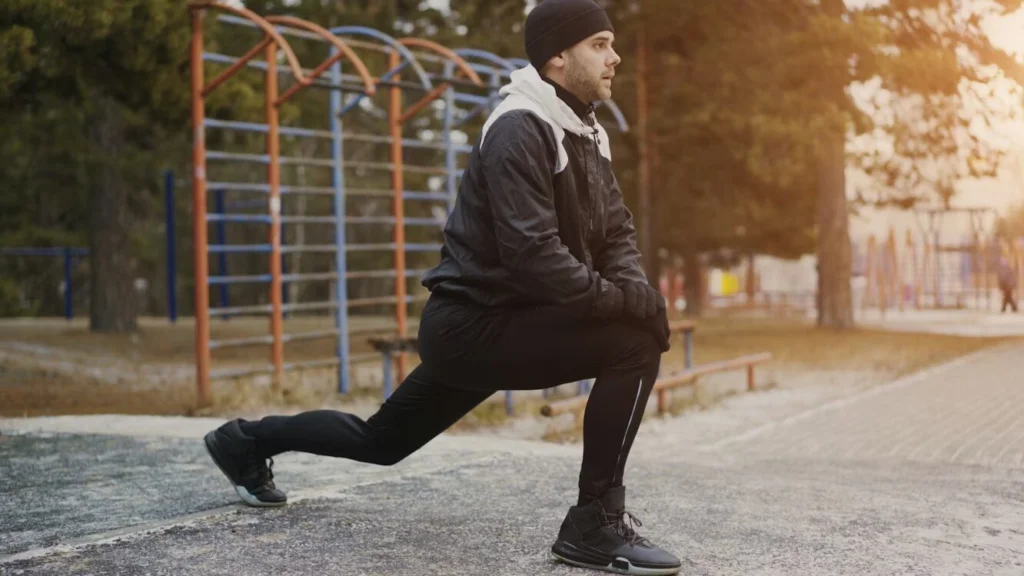
This routine is for the days when your energy is low, your schedule is packed and your enthusiasm is unavailable. It trains your entire lower body without equipment, a huge space or a motivational speech.
Do each exercise for 40 seconds, then rest for 20 seconds. Complete the full circuit twice:

https://unsplash.com/photos/woman-practicing-yoga-on-a-green-mat-indoors-lp4jPzrpwvk
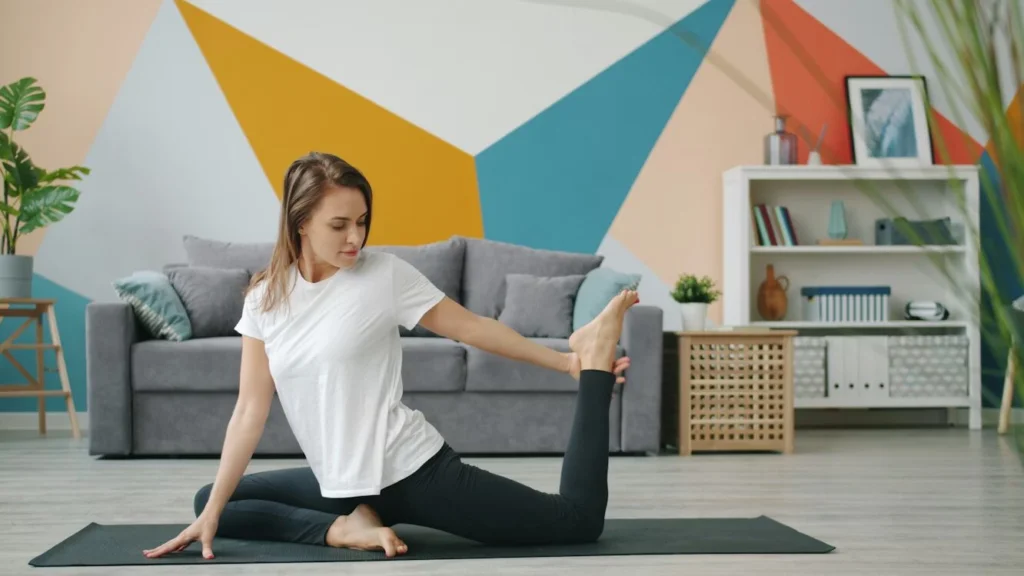
Maybe you hate leg day because jumping hurts or your knees get cranky. Use this low-impact version instead. Low-impact just means you’re choosing a version your body is more likely to tolerate.
Do each move for 45 seconds, then rest for 15 seconds. Repeat for two rounds:

https://unsplash.com/photos/man-practicing-yoga-on-a-mat-in-a-colorful-room-ZoYJwbavlhk
If you get bored easily, this routine adds a little more energy. It still fits into 10 minutes, but it feels less like a classic workout and more like a quick challenge.
Do 30 seconds of work and 15 seconds of rest. Complete two rounds:
https://unsplash.com/photos/woman-practicing-yoga-on-a-mat-in-a-living-room-sYRp4HJXZCc
If you are just starting, your version does not need to be dramatic. In fact, simpler is better. Since you’re still building the habit, starting small is smart. Try this structure:
If you’re specifically focused on building stronger, more defined glutes, there’s one exercise that stands out. Dr. Milica McDowell, DPT, CF-L1, and author of the upcoming book Walk, recommends the loaded walking lunge.
“Best leg toning exercise to grow your glutes is a loaded walking lunge,” says Dr. McDowell. “Load with whatever you are comfortable with (weighted vest, a kiddo, dumbbells) and perform at least 3-4 sets. The number of reps should be where you stop when you feel like your form fails (this could be between 8 and 20 reps, depending on how heavy the weight is). Lunge with torso stacked on your pelvis and do gently tap the kneecap all the way to the floor, kneecap directly under the hip. This creates a challenge for hip extension, which is a primary glute movement.”
This exercise works because it combines resistance, balance, and the specific hip extension pattern that activates the glutes effectively.
When you dislike leg training, it is easy to rush through it to get it over with. Unfortunately, that can make the workout less effective. A good rule is to finish feeling worked, not wrecked. Watch out for these common mistakes:
Are you curious what to eat to get toned legs? The honest answer is that no food directly “tones” your legs. It supports the process. Focus on these basics:
If you stay consistent, you may notice changes such as better strength, improved stability and more endurance. However, physical changes also depend on factors like nutrition, genetics, recovery and overall activity level.
Yes. Age does not prevent your legs from getting stronger or firmer. Muscle can still respond to strength training later in life. Regular exercise plus good nutrition can improve how your legs look and feel over time. Progress may be slower, but it’s still absolutely possible.
The 3-3-3 rule can mean different things depending on who is using it. In general fitness conversations, it often refers to doing three exercises for three rounds three times a week. It’s not a universal scientific rule, but it can be a simple way to structure beginner workouts when you want something easy to remember.
Leg toning exercises work when you do them consistently and pair them with supportive habits. They help strengthen your quads, hamstrings, glutes, calves and inner thighs. Visible toning also depends on your overall activity, nutrition, recovery and body-fat levels. Results are usually gradual rather than instant.
For most people, two to four days per week is a realistic and effective range. Beginners often do well with two or three sessions. Meanwhile, more experienced exercisers may benefit from four shorter routines. The key is choosing a schedule you can maintain without dreading it.
Focus on consistent leg training, regular walking and balanced nutrition. Squats, lunges, glute bridges and inner leg toning exercises can help build muscle in the thigh area. Over time, that can improve firmness and shape.
A short, manageable routine that includes effective leg-toning exercises, patience and consistency can help you get stronger, more toned legs. So, the next time you think, “I should work out, but I really do not want to do leg day,” remember this — 10 minutes is enough to make progress.
Your email address will only be used to send you our newsletter, and at any time you may unsubscribe. For more information, see our Privacy Policy.
