

Body + Mind is reader-supported. We may earn an affiliate commission when you buy through some of the links on our site.
Weighted ab exercises add resistance to familiar core movements so your muscles work harder and grow stronger over time. Whether you exercise at home with a dumbbell or in a gym with a cable machine, the key is to learn which movements effectively train your core and how to perform them safely. This guide will walk you through nine weighted ab exercises that can help you build a stronger, more resilient core.
Lie on your back with your knees bent at 90 degrees and your arms extended toward the ceiling, holding a light dumbbell or weight plate. Press your lower back gently into the floor. Slowly lower your right arm and left leg toward the floor, then return to the starting position and switch sides.
This exercise teaches your core to resist extension, which is one of the functions the abdominal muscles contribute to. Perform 8-12 repetitions per side.
Lie on your back with your knees bent and hold a dumbbell against your chest. Exhale as you lift your shoulders off the floor, then lower slowly until your shoulder blades touch down.
Keep the movement small and controlled rather than trying to sit all the way up. Aim for 10-15 repetitions.
Lie on your back and hold a dumbbell lightly between your feet or wear ankle weights. Bend your knees and lift them toward your chest, curling your hips slightly off the floor. Lower slowly until your feet hover just above the ground.
This variation places more emphasis on the lower portion of the rectus abdominis and challenges pelvic control. Perform 8-12 repetitions.
Sit down on the floor and keep your knees bent. Then, lean back while keeping your chest lifted. Do this while holding a dumbbell, a medicine ball or a plate with both hands. Rotate your torso to both sides alternately. Make sure you do it in a smooth, slow and controlled motion.
Move from your ribs rather than swinging your arms. Complete 10-16 total repetitions.
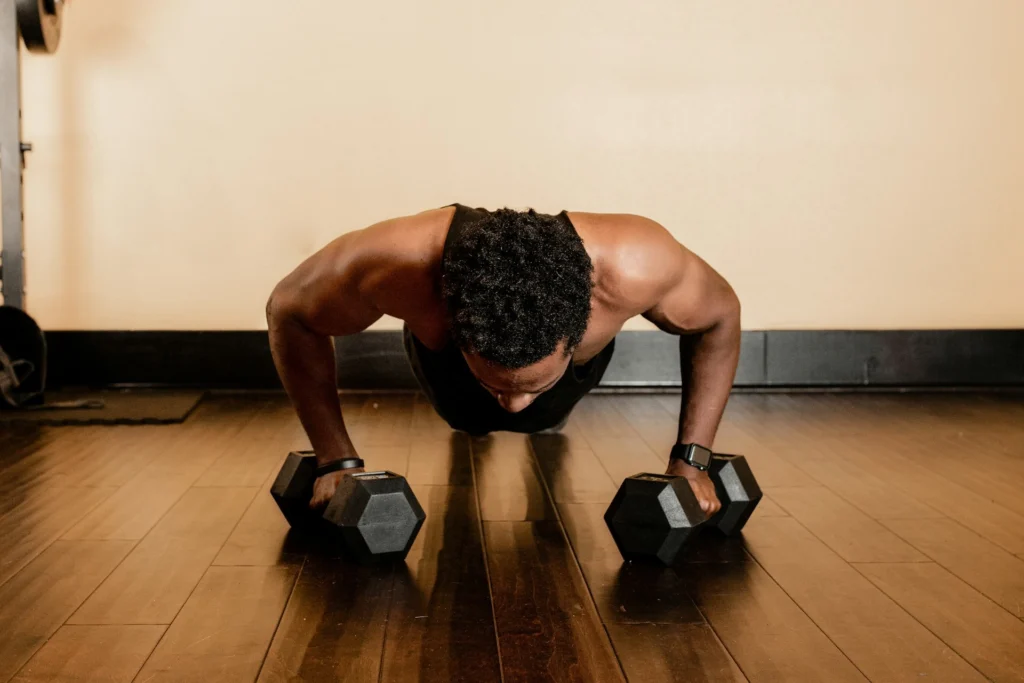
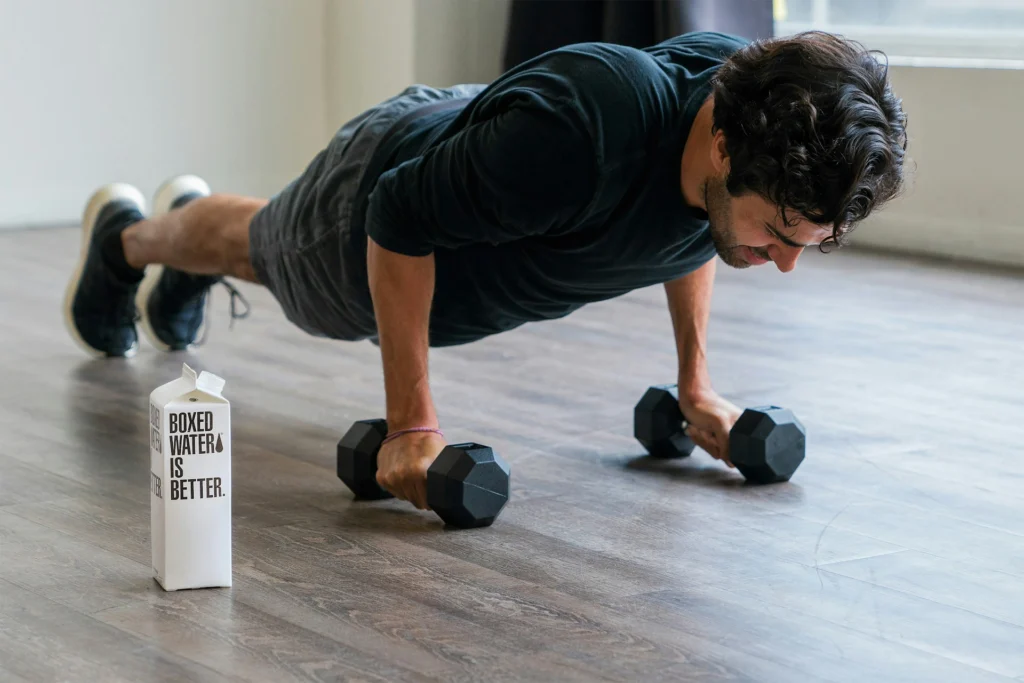
Set up in a high plank with a dumbbell placed beside one hand. Reach across with the opposite hand and drag the dumbbell to the other side, then repeat with the other hand. Your hips should stay as level as possible throughout the exercise.
This movement trains anti-rotation strength and shoulder stability. Perform 6-10 drags per side.
Stand sideways to a cable machine or resistance band and hold the handle with both hands. Pull the handle diagonally across your body from high to low while rotating through your torso and hips. Return slowly to the starting position.
The wood chop mimics many real-life rotational patterns and helps develop power through the trunk. Perform 10-12 repetitions per side.
Lie on your back with your knees bent and hold a weight plate or dumbbell close to your chest. Sit up smoothly until your torso is upright, then lower with control.
Avoid jerking yourself upward. Keep the weight close to your body and perform 8-12 repetitions.
Begin in a high plank with a dumbbell in each hand. Row one dumbbell toward your rib cage while keeping your hips square to the floor, then lower it and repeat on the other side.
This exercise combines a plank with a rowing movement, forcing your core to resist rotation. Complete 6-10 repetitions per side.
Stand straight with a dumbbell in one hand. You can hold another weight in your other hand if you want. Slowly bend sideways toward the weight, then return to standing.
Finish all repetitions on one side before switching or alternate between sides. Use a moderate range of motion and avoid leaning forward or backward. Perform 10-15 repetitions per side.
One of the biggest mistakes is relying on momentum rather than muscle tension. Fast, jerky repetitions may reduce the workload on your core and increase stress on your neck and lower back. Slow down the lowering phase and focus on maintaining tension.
Another common issue is forgetting to breathe. Exhale during the effort portion of the movement and inhale during the easier phase. Proper breathing helps your deep core muscles engage more effectively.
Adults should incorporate muscle-strengthening activities at least twice a week. They also need to get 150 minutes of moderate-intensity activity or 75 minutes of vigorous-intensity activity, or an equivalent mix of the two.
You can split it into smaller chunks, like 30 minutes a day, 5 days a week or spread it out in any way that fits your schedule.
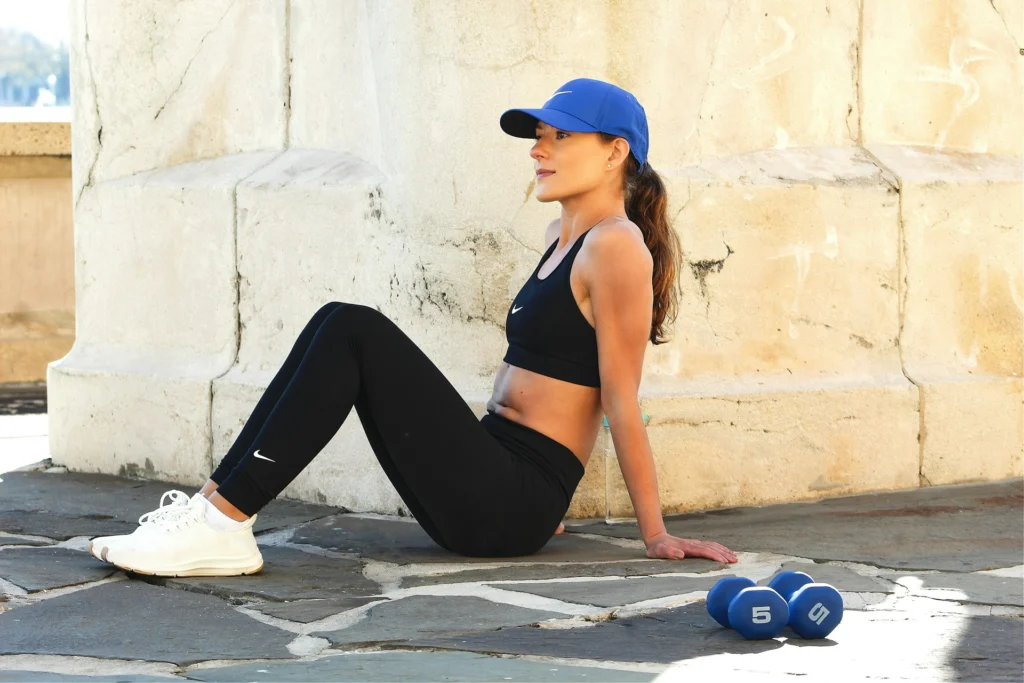
Your core is more than just your abs. It’s a complex group of muscles, including deep ones like the transversus abdominis and the pelvic floor, that wraps around your torso like a natural corset. These muscles are crucial for stabilizing your spine and shielding it from excessive force.
Focusing on core stability helps improve balance and reduces the risk of injury. Strength and resistance training can improve muscular strength, which helps protect your bones and joints by absorbing the impact of high-intensity exercises like running and jumping, while also supporting them during daily activities such as walking or climbing stairs.
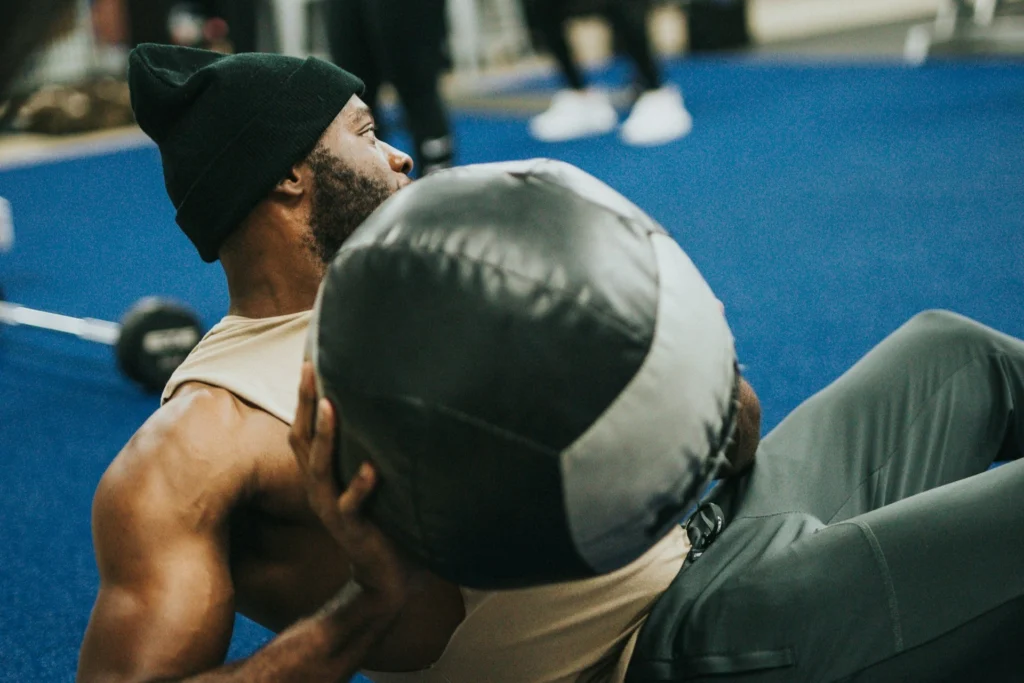
Start lighter than you think you need. If you use medium weight, you should be able to complete 8-12 controlled repetitions while keeping your lower back stable and your breathing steady. If you swing the weight, hold your breath throughout the set or lose spinal position, the load is too heavy.
For most beginners, a 5-15 lb (2-7 kg) dumbbell or plate is plenty. Increase the weight only when you can complete all repetitions with excellent form for two or three consecutive workouts.
Weighted ab exercises can take your core training from basic to highly effective. By adding resistance, you challenge your abdominal muscles to stabilize, rotate and resist movement in ways that better reflect real life. Start with a light weight, focus on perfect form and gradually increase the challenge as you become stronger. Consistently performing a handful of well-chosen weighted movements two or three times per week can produce meaningful improvements in strength, stability and overall fitness.
Your email address will only be used to send you our newsletter, and at any time you may unsubscribe. For more information, see our Privacy Policy.
