
Body + Mind is reader-supported. We may earn an affiliate commission when you buy through some of the links on our site.
If your afternoon coffee jitters have you Googling calmer options at 2 a.m., you’re not alone. L-theanine, the amino acid found naturally in green tea, has quietly become one of the most talked-about supplements for taking the edge off anxiety without knocking you out. But does L-theanine help with anxiety, or is it just Reddit hype? Here’s the science, dosage and doubts, all in one place.
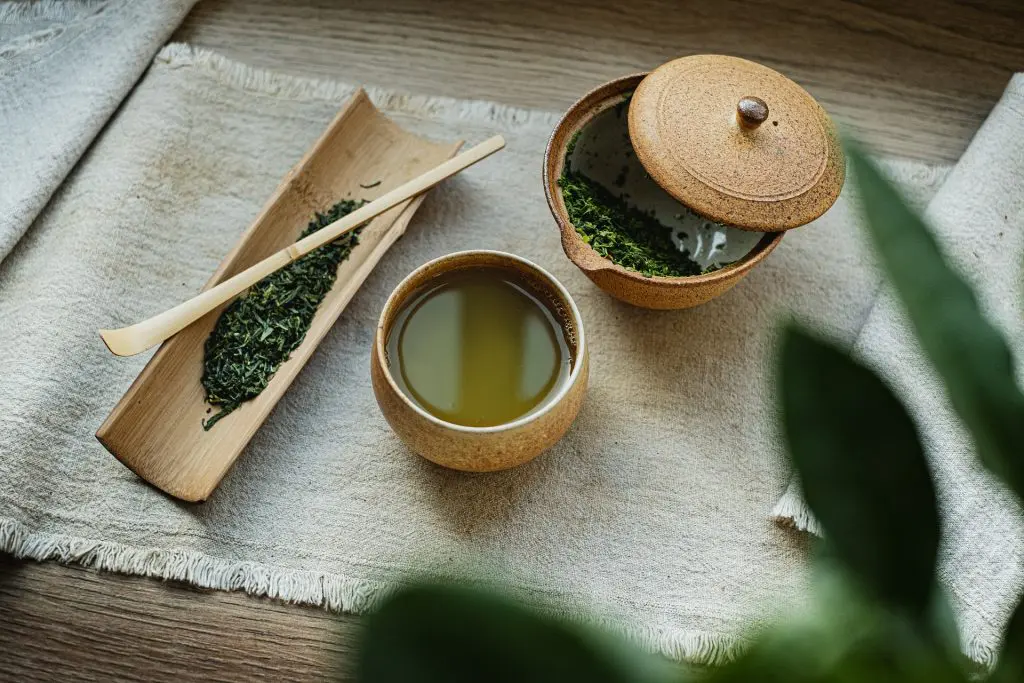
When it comes to L-theanine for anxiety, the science is more nuanced than any single Reddit thread lets on. L-theanine is a naturally occurring amino acid, most abundant in green tea and black tea leaves, that crosses into your brain and interacts with calming neurotransmitters like GABA. Unlike a sedative, it doesn’t knock you out. Instead, research points to a state some scientists call “calm alertness,” where you feel less wound up without feeling foggy. Jacob Hill, ND, a naturopathic medicine specialist at Cleveland Clinic, says L-theanine “may support relaxation and stress reduction,” though he notes larger studies are needed to confirm that.
That combination is why so many people reach for it before a stressful meeting, a big exam or just a chaotic Tuesday, hoping for relief that doesn’t come with a crash.
If you took a capsule ten minutes ago and you’re refreshing this page hoping to feel different immediately, take a breath. Results aren’t usually instant. Most human trials measure L-theanine’s calming effects starting around 30 minutes after a single dose, with the strongest window between one and two hours later, as the compound reaches peak levels in the bloodstream and crosses into the brain.
One study examined this exact acute, single-dose response and found measurable effects on stress within that same time frame. That’s a very different timeline than something like an SSRI, which can take weeks to show benefits, but it’s also not the instant switch-flip some anxious-brain TikToks promise. Give it an hour before deciding whether it’s working for you.
There’s no strong evidence to support that regular use dulls L-theanine’s effects, the way tolerance builds with some anti-anxiety medications. A completed 2023 clinical trial registered with the U.S. National Institutes of Health tested daily L-theanine use in adults who experience ongoing moderate stress, rather than a one-off dose, which is exactly the kind of repeated-use situation that would reveal a tolerance problem if one existed.
Researchers haven’t reported the kind of diminishing-returns pattern you’d expect from a substance your body adapts to. That said, L-theanine isn’t magic. If your anxiety feels unmanageable even with consistent use, that’s a sign to consult a doctor or therapist rather than just upping your dose.
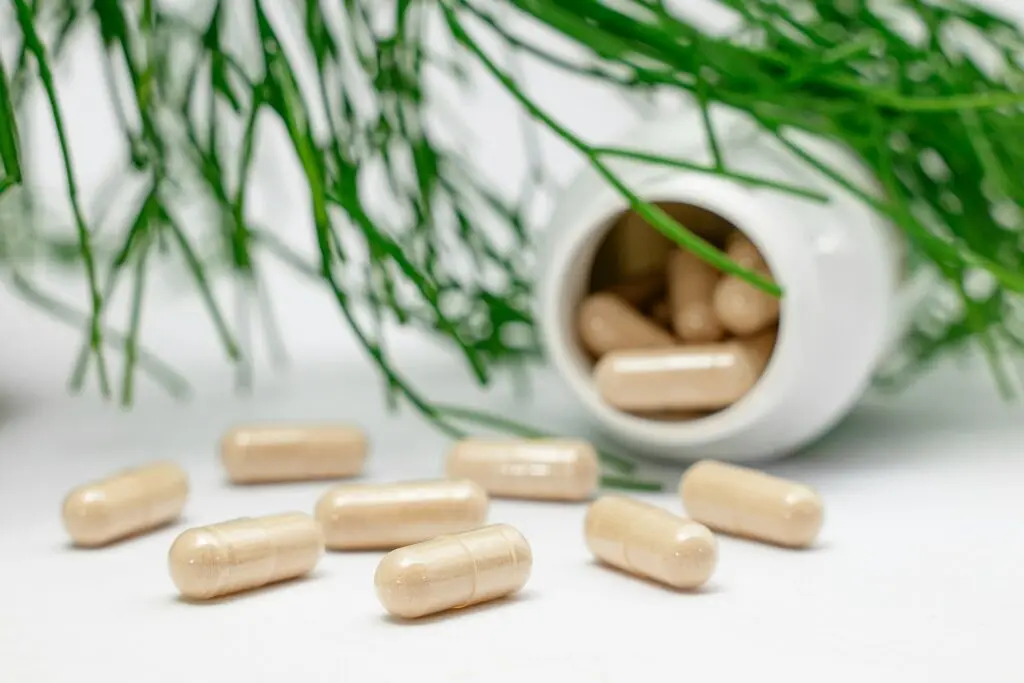
Clinical studies on L-theanine and anxiety have tested a fairly wide range, usually somewhere between 100 and 400 milligrams a day, often split into two doses rather than one large one. One study examined dosing patterns used to treat anxiety and other mental health conditions and found that studies clustering around 200 milligrams per dose showed some of the most consistent results for everyday stress and worry.
That’s roughly the amount in two to three cups of green tea, though supplement capsules make it easier to hit a precise number than steeping does. If you’re new to it, starting low, around 100 to 200 milligrams and watching how you feel over a few days beats jumping straight to the high end of the range. More isn’t automatically better here and there’s no research suggesting mega-dosing speeds up results.
There’s no single “correct” hour stamped on the bottle, and that’s because L-theanine doesn’t work like a sleep aid or a stimulant. Research has found that L-theanine acts through calming, non-sedating pathways rather than the sedative-hypnotic route sleep medications use, which is part of why some people take it first thing to soften morning anxiety and others save it for evening wind-down without either group reporting grogginess.
If you’re using it to manage anticipatory anxiety before a specific event, like a flight or presentation, timing it 30 to 60 minutes beforehand makes more sense than a fixed daily schedule. If your goal is a steadier baseline calm throughout the day, splitting a dose morning and afternoon tends to work better than one large dose at night.
This is one question you shouldn’t answer with a Reddit thread alone. Researchers have studied L-theanine as an add-on alongside antidepressants and other psychiatric medications in controlled settings. One study found that patients combining L-theanine with existing drug treatments for conditions including generalized anxiety disorder, and added it under a doctor’s supervision, not on their own, saw some symptom imporvement.
Supplements and prescription medications can interact in ways that aren’t always predictable and SSRIs already affect serotonin activity, so layering anything else into that system deserves a conversation with the prescriber who knows your full history, not a guess based on forum posts. If you’re curious about adding L-theanine to an existing prescription, bring it up at your next appointment rather than starting on your own.
If you tried it once and felt nothing, you’re not imagining it, and you’re not doing it wrong. The benefits show up mainly in people who started with higher-than-average anxiety levels, while people with lower baseline stress often reported results no different from a placebo pill. Tea quality, individual metabolism, dose size and even how much caffeine you’re combining it with can all shift the outcome, too.
Science doesn’t yet fully match the popularity of L-theanine as a wellness trend. None of that means it’s useless, though. Plenty of people genuinely feel calmer, but it doesn’t mean it isn’t a guaranteed fix and if anxiety is consistently getting in the way of your life, a supplement shouldn’t be the only tool in your kit. Pairing it with other calming habits, like winding down with guided yoga nidra sessions, often works better than relying on a single fix.
L-theanine isn’t a magic switch, but for a lot of people, it’s a gentle, research-backed way to soften anxiety’s edge without the grogginess of stronger options. Start low, give it time to kick in and loop in your doctor if you’re on other medications. Pair it with rest, movement or a calming wind-down routine and you might find your nervous system finally gets the quiet it’s been asking for.
Your email address will only be used to send you our newsletter, and at any time you may unsubscribe. For more information, see our Privacy Policy.
