
Body + Mind is reader-supported. We may earn an affiliate commission when you buy through some of the links on our site.
Finding the right bra size can make a big difference. A well-fitting bra improves comfort, provides better support and helps you feel more confident throughout the day. Yet many people continue wearing the same size for years without realizing that body changes, lifestyle habits and even aging can affect how a bra fits.
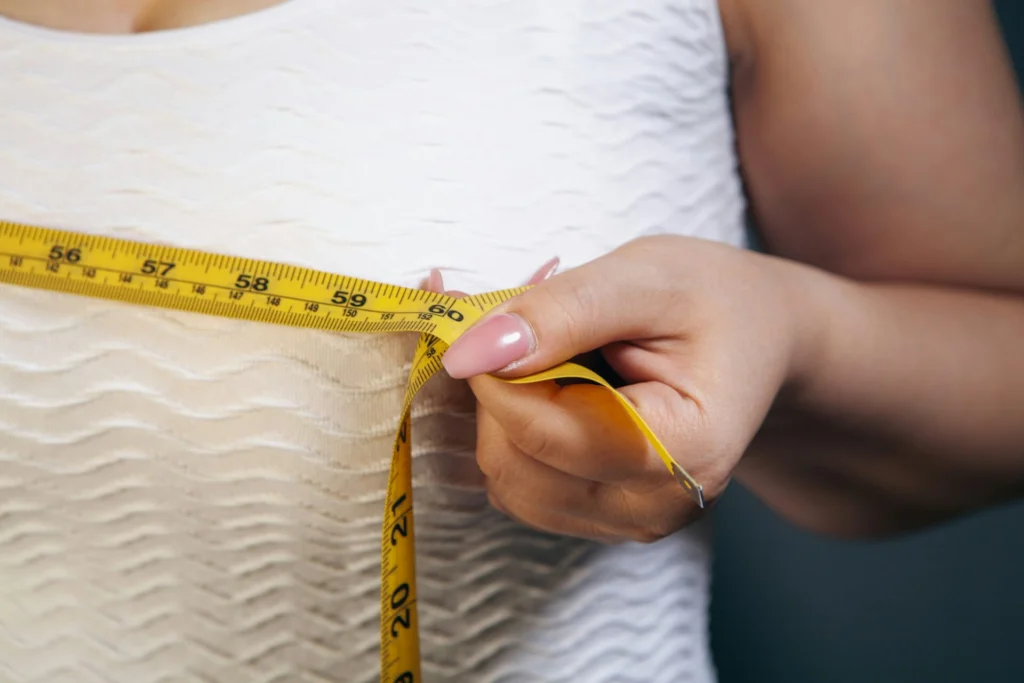
Measuring your bra size at home is easier than you might think. With a soft measuring tape and a few simple calculations, you can find a starting size that helps you shop more confidently and enjoy a better fit. Follow these steps to measure your band size, determine your cup size and get closer to finding bras that feel comfortable and supportive throughout the day.
Wrap a flexible tape around your rib cage, right under your breasts. Keep it snug and level all around your body. Make sure you’re not pulling too tightly so it doesn’t feel restrictive.
Record the measurement in inches and round to the nearest whole number. In many sizing systems, an even number becomes your starting band size. If your measurement is odd, you may round to the nearest even number. For example, a 33-inch underbust measurement often corresponds to a 34 band size.
Measure around the most prominent part of your bust. Remember to keep the tape a little loose and parallel to the floor. Standing naturally with your shoulders relaxed also helps ensure you get the most accurate measurements.
Write down this measurement in inches. This number represents your full bust circumference and will be used to determine your cup size.
All you need to do is subtract your band measurement from your chest measurement. The difference between those two numbers will correspond to a cup size.
As a general rule, each additional inch between your band and bust measurements corresponds to the next cup size. A one-inch difference typically points to an A cup, a two-inch difference to a B cup, a three-inch difference to a C cup and so on.
For instance, if your band measurement is 34 inches and your bust is 38, there’s a four-inch difference. You would technically be a 34D.
Remember that this is a starting point, not a final answer. Different brands and bra styles may fit slightly differently, so trying on bras remains an important part of the process.t this is a starting point, not a final answer. Different brands and bra styles may fit slightly differently, so trying on bras remains an important part of the process.

A properly fitted bra does much more than determine how clothing looks. It can help distribute weight more evenly, improve comfort during daily activities and provide the support your body needs throughout the day. That’s why learning how to measure bra size is so important.
Bras can be especially useful for women with larger breasts because a bigger chest may increase the strain on their spines, causing back pain. So, the support bras offer can help alleviate this.
A proper bra fit becomes even more important during physical activity, as this detail can influence comfort. The constant movement of the breasts can even be painful if you don’t have a proper bra to support that area.
A good fit tends to feel effortless. The band sits comfortably around your rib cage, the cups contain breast tissue without gaps or overflow and the straps stay in place without carrying most of the bra’s weight. When all of these elements work together, you can move through your day with greater comfort and confidence.
Many people assume their bra size remains the same throughout adulthood, but your body naturally changes over time. Weight fluctuations, pregnancy, menopause, hormonal shifts and exercise habits can all influence breast size and shape. This is one reason fit experts often recommend checking your measurements every six to twelve months.
Even relatively small body changes may affect how a bra feels and performs. Reassessing your size periodically lets you adapt to changes and maintain the level of support and comfort that works best for you. It can be helpful to think of bra size as a measurement that evolves with your body.
A few simple habits can improve the accuracy of your measurements.
Bra sizing standards vary between manufacturers, so comfort and fit should always be your priority over the number and letter on the tag.
Measurements provide a strong starting point, but breast shape also plays an important role in finding the right bra. The shape, size and contour of the breasts are unique to every single woman, and these elements are connected to genetics, exercise, weight, menstrual cycles, and many other factors.
Two people with identical measurements may prefer different bra styles because their breast shapes distribute volume differently. Some people have more fullness at the bottom of the breast, while others have more fullness at the top or sides.
Features such as breast spacing, projection and root width can influence how a particular bra style fits. It’s important to experiment with several styles to find the perfect bra fit for you.
Full-coverage bras, balconette bras and plunge bras may all fit differently despite sharing the same size label. Paying attention to both shape and measurements can help you find options that feel especially comfortable and supportive.
A few minutes with a measuring tape can make a meaningful difference in your everyday comfort and support. While your measurements can give you a helpful starting point, the best bra size is ultimately the one that feels secure, comfortable and suited to your unique shape. Regularly checking your size and paying attention to fit can help you find bras that truly work for your body.

Your email address will only be used to send you our newsletter, and at any time you may unsubscribe. For more information, see our Privacy Policy.
