

Body + Mind is reader-supported. We may earn an affiliate commission when you buy through some of the links on our site.
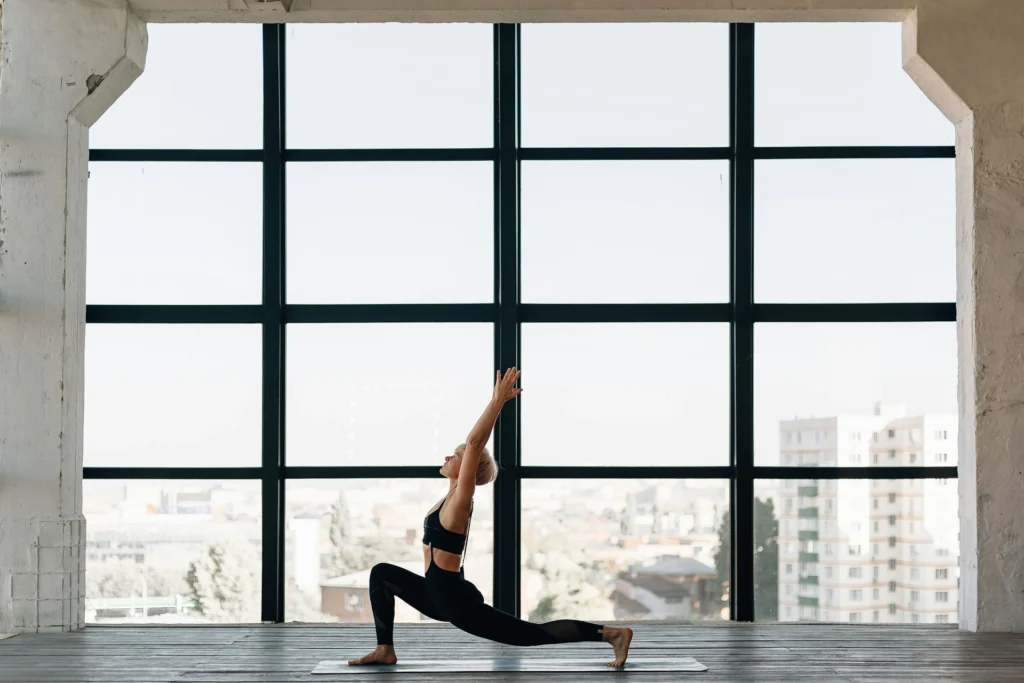
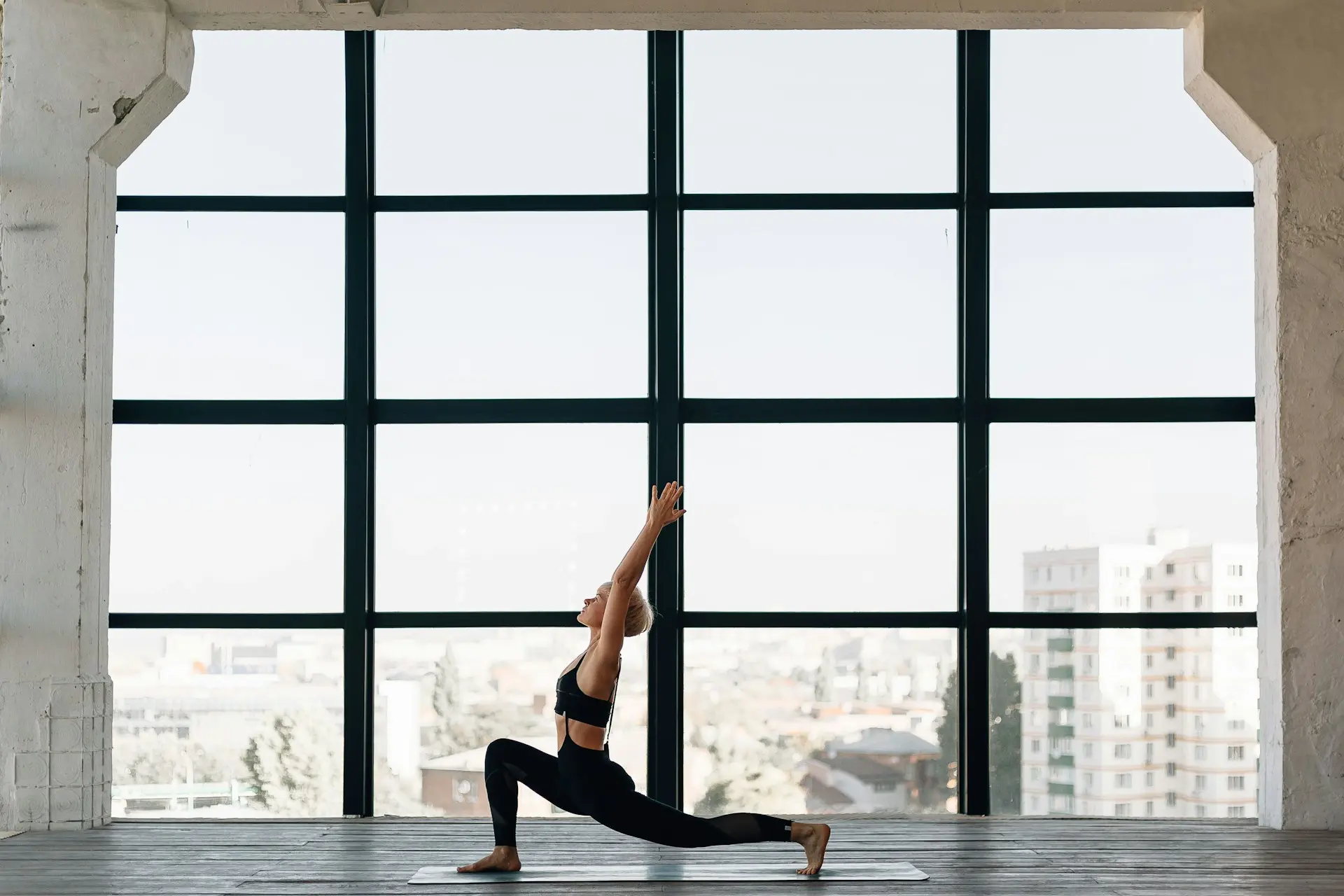
Alt text: Woman doing yogalates in front of a window
If you’re torn between a workout that builds core strength and one that enhances mindfulness, there’s good news: You don’t have to choose. Yogalates is a dynamic fusion workout that does both. This practice combines the flexibility and mindfulness of yoga with the core-strengthening precision of Pilates, creating an exercise strategy that tones you from head to toe. It’s a great way to connect the physical and mental halves of yourself into the whole you.
Yogalates benefits are varied, and they all stem from blending these two powerful disciplines to create a well-rounded routine. Its gentle movement helps you reach your inner and outer potential, making it an excellent option to stretch yourself in more ways than one.
Yogalates was developed in 1997 by personal trainer Jonathan Urla, and it was later popularized by Louise Solomon. It merges the ancient Indian practice of yoga with Pilates, which was developed by Joseph Pilates in the 1920s. You get the mind and body awareness of yoga, which focuses on strength, flexibility and balance, along with Pilates techniques to improve posture and develop a stronger core. It is both challenging and accessible, as it targets your core muscles through poses but is scalable to your fitness level.
Yogalates’ physical results come from combining two different approaches to movement. Yoga focuses on improving your flexibility, while Pilates is designed to build core strength. Blending these disciplines gives you the best of both worlds.
Yogalates leans into Pilates-based exercises that target the deep abdominal muscles, known as your “powerhouse.” Your core includes more than just your abs—it extends to your back, glutes and diaphragm, among other muscles. Having a strong core helps improve your posture, alleviate back pain and enhance balance in everyday activities, providing you with the baseline strength to power through your days.
Yoga-inspired stretches and poses, known as asanas, help lengthen your muscles and improve the range of motion in your joints. This makes it an excellent low-impact option if you have tight muscles caused by a sedentary lifestyle, like so many desk jockeys do. Yogalates benefits include reduced spinal stiffness and improved posture and alignment.
The combination of controlled resistance from Pilates and bodyweight poses from yoga builds muscular endurance without adding bulk. It’s a great way to strengthen your muscles without lifting heavy weights. Strength training is good for both your outside and your inside, as it provides you with a toned, defined physique that gives you a physical and emotional lift.

Alt text: Woman doing yogalates outdoors
It’s always a good idea to exercise your mind as well as your body, and a yogalates workout does just that. The practice’s mindful breathing, deep relaxation, and focus on the core help reduce stress and sharpen your focus.
Yogalates’ emphasis on controlled breathing calms the nervous system. Diaphragmatic breathing helps stimulate the vagus nerve, which tells your brain to activate the parasympathetic nervous system and soothe stress. The intense focus required to move between poses serves as a form of moving meditation and helps quiet anxious thoughts.
If you find yourself struggling to concentrate, yogalates can help. Synchronizing your breath with movement demands present-moment awareness and requires your complete focus. Holding poses for an extended period redirects your attention to your body and breath, strengthening neural pathways and improving cognitive skills like learning and memory. This practice trains your mind to stay focused, which has benefits beyond the studio.
Yogalates encourages you to tune in to your body’s signals and mechanics. Combining intentional breath, core awareness and mindful movement can lead to improved emotional balance. It can result in better posture, more efficient movement and a greater appreciation for what your body can do. Studies show that regular participation in diverse yoga practices can lead to higher levels of spiritual connection and mental well-being, boosting your wellness.
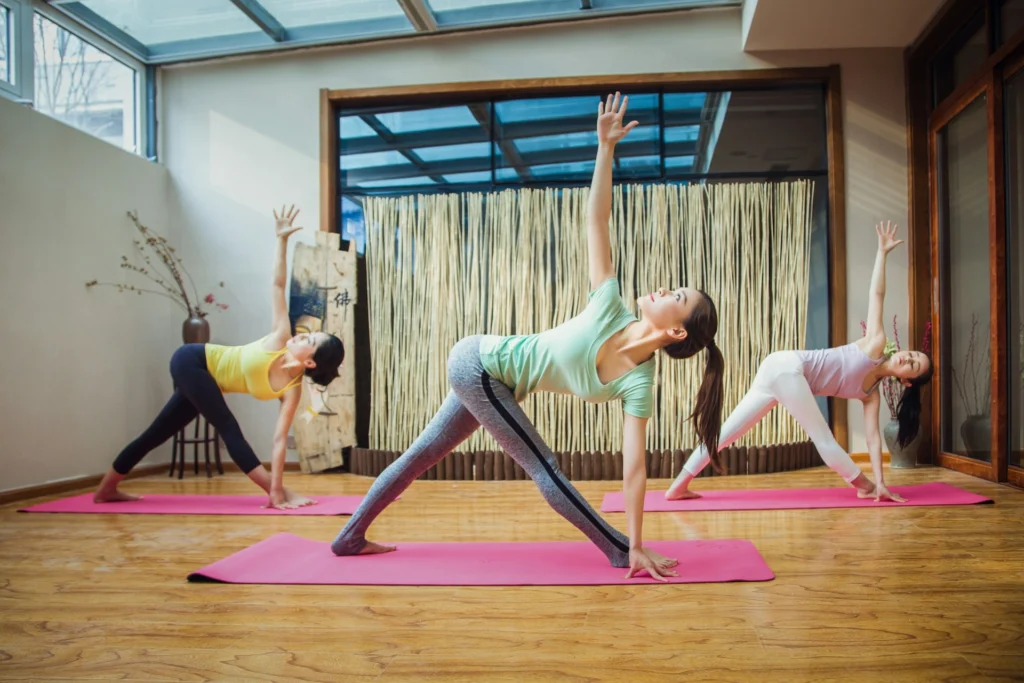
Alt text: People participating in a yogalates class
Yogalates benefits can be felt by many people, including beginners, athletes and those of you stuck behind a desk all day. Here’s how to get started.
Most yogalates classes begin with a Pilates-inspired warmup featuring gentle breathing exercises. You’ll then move on to a series of flowing sequences, including downward dogs and planks. There will be a strong focus on core activation and stabilization, as well as balance work to improve stability. Restorative stretches will end your session. You can also expect to use a variety of equipment, such as mats and resistance bands, to help boost your results.
Poses and exercises you can expect to see include:
You’ll want to be sure your yogalates instructor is certified in yoga or Pilates and has experience teaching yogalates specifically. Ask about their background in blending the two disciplines. It’s also a good idea to observe a class before committing to see how the teacher handles people of various fitness levels and abilities.
Whenever trying a new workout routine, it’s important to listen to your body. You know your capabilities, and while it’s always great to try new things, you want to be sure you’re comfortable. Don’t be afraid to modify poses if something does not feel right for you.
Yogalates benefits can be felt in your body and your mind. It’s more than just another exercise routine—it’s a holistic practice that strengthens and calms you at the same time. Try a yogalates workout if you want to feel centered, supple and soothed.

Your email address will only be used to send you our newsletter, and at any time you may unsubscribe. For more information, see our Privacy Policy.
