

Body + Mind is reader-supported. We may earn an affiliate commission when you buy through some of the links on our site.
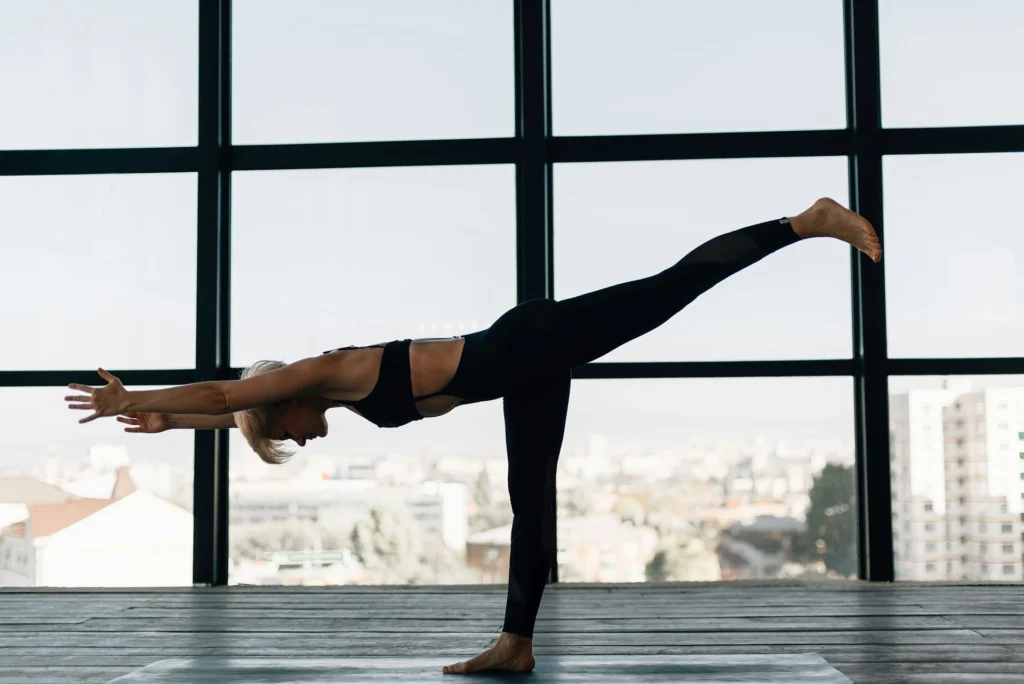
Alt text: A woman doing a power yoga pose for flexible strength in front of ceiling-to-floor windows
Photo tags: power yoga
Power yoga is a vigorous and athletic style of yoga, combining the elements of strength, cardiovascular conditioning and flexibility. It differs from traditional yoga by using dynamic sequences and sustained poses to build muscle, burn calories and improve endurance.
This article contains:
Practicing yoga feels serene and refreshing. However, maybe you’re considering a workout that combines the peaceful side of yoga with strength-building exercises. Power yoga might just be what you’re looking for. This style incorporates elements of calisthenics, making it challenging even for dedicated athletes. As a result, you work on your strength, cardiovascular conditioning, flexibility and mental discipline during sessions. Here’s what you need to know about power yoga.
Power yoga draws its origins from Ashtanga but differs from the structured series of poses associated with this practice. Gyms use the term “power yoga” to let practitioners know they aren’t in for gentle Hatha or Yin yoga. Flows are usually intensive, leaving you feeling sweaty and spent after the session.
Power yoga differs from Ashtanga and Vinyasa in its sequence. Unlike in Ashtanga, you will do different poses in each class rather than a fixed series. You will also hold stationary poses for a considerable time in power yoga instead of flowing more quickly from one to the other, as in Vinyasa. Your guide may interject static holds in between Vinyasa flows to sculpt muscle.
One of the founders, Birch, employed eight axioms to describe the practice’s purpose. They are:
Although power yoga classes will get you sweaty, many lack a beginner class. Guides typically integrate beginners into the class, offering modifications to accommodate your current abilities. You need to be patient with your progress. Focus on working on foundational poses before fully matching everyone else’s pace.
Power yoga is an excellent exercise for building strength and burning more calories. The poses work on different muscle groups, helping tone your arms, legs and core. The faster pace elevates your heart rate, which makes it an excellent form of cardio. The dynamic stretches of power yoga also help improve flexibility.
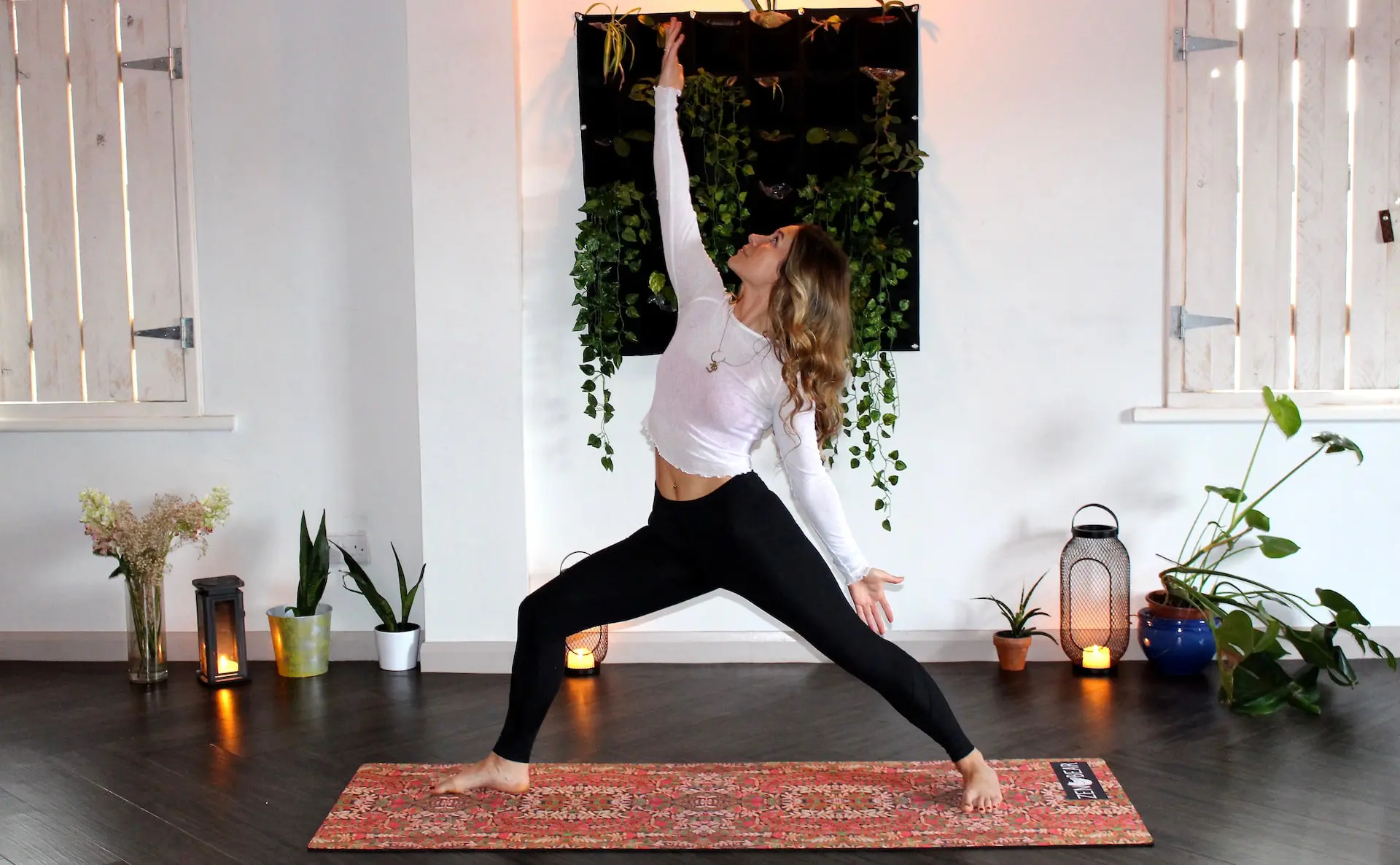
Are you interested in trying some power yoga moves to build flexible strength today? You can try these poses anytime and anywhere. If you typically lift weights, try adding these exercises into your rotation and see how they impact your overall muscular development.
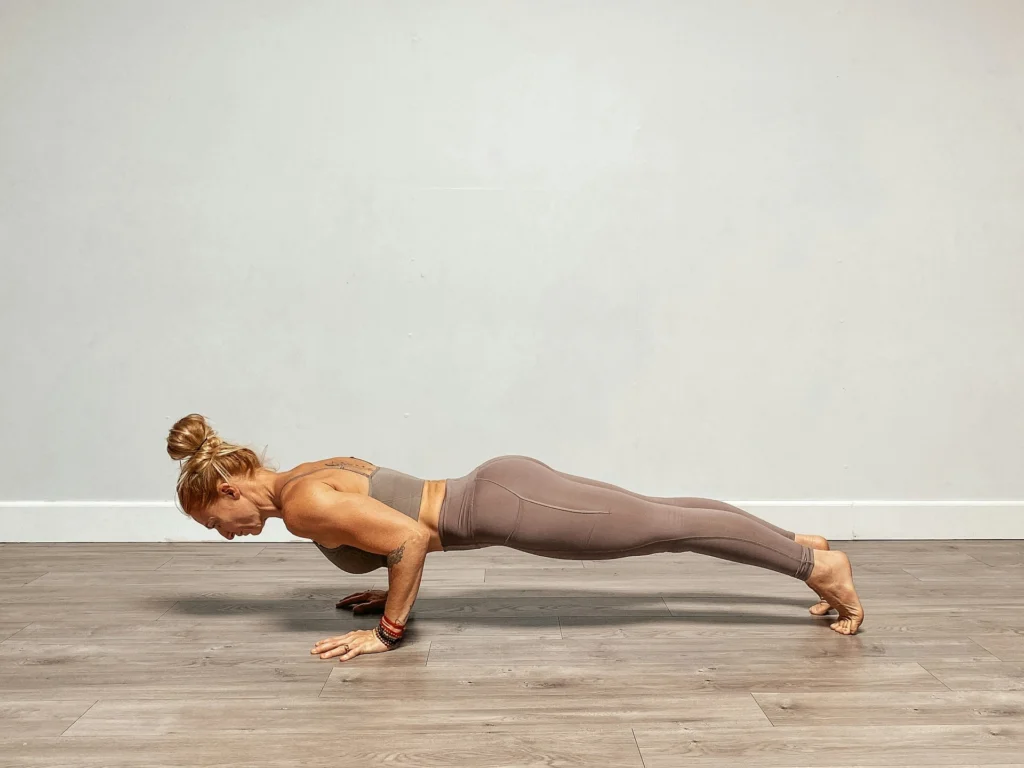
Alt text: A woman performing the Chaturanga yoga pose, which looks like a plank or pushup, on a wooden floor, demonstrating strength and fitness in a home workout setting.
Photo tag: yoga for strength
A chaturanga is essentially a pushup, with a few notable exceptions. Instead of elbows out, keep them tucked into your body to work your triceps. Here’s how you can easily do a chaturanga pose as a beginner.
Begin with a straight plank. Holding this pose alone works your core, but you also want to target your arms. Shift your body weight slightly by leaning forward on your toes, projecting your shoulders to the front a tiny bit and bending at the elbows. Lower until your shoulders nearly rest on your hands and your torso hovers about an inch off the ground.
From here, you can do a chaturanga pushup and return to a plank position. A few repetitions will help tone your triceps. You can also push into an upward-facing dog, a core move in a typical sun salutation-style Vinyasa.
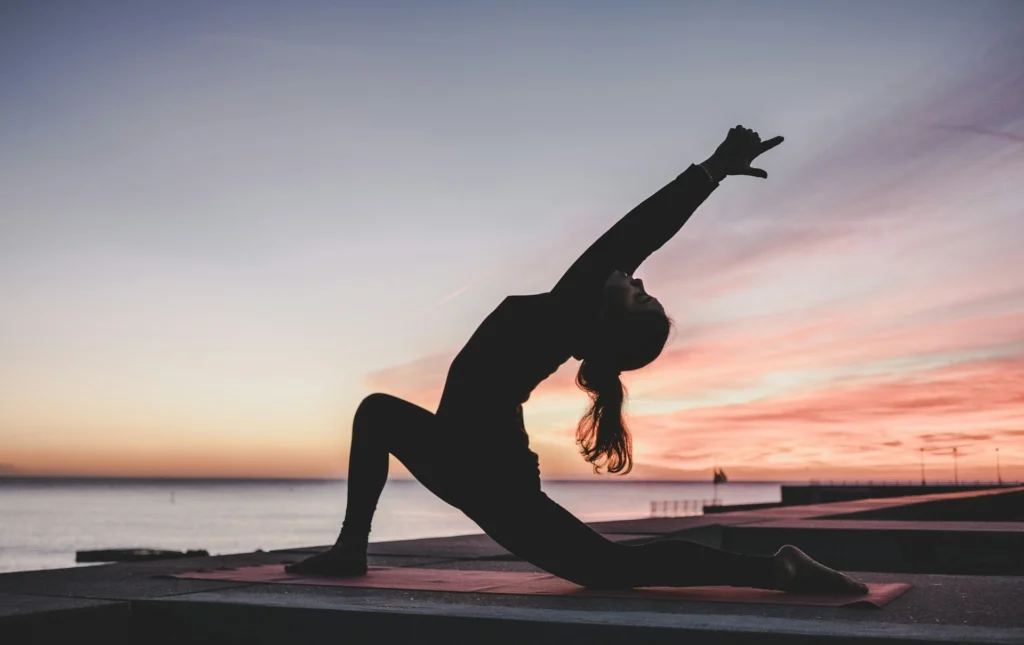
Alt text: The silhouette of a woman practicing yoga in a high lunge pose against a vibrant sunset backdrop.
Photo tag: flexible strength, yoga for power and strength
High lunges really burn your legs. You can also add variations that engage your core. In most power yoga classes, you’ll get into this move through a Vinyasa, so perform a sun salutation until you get to the downward-facing dog step.
From there, do a three-legged downward dog or down-split, pulling one leg through and placing it between your hands. Stand with your front leg bent at a 90-degree angle and your back leg relatively straight, keeping a slight bend in the knee to protect that delicate joint.
A stationary hold works on your quads and hamstrings. You can also lift and lower yourself vertically, feeling your leg muscles and core engage as you struggle to balance. A little twist adds extra core work and a balance challenge.
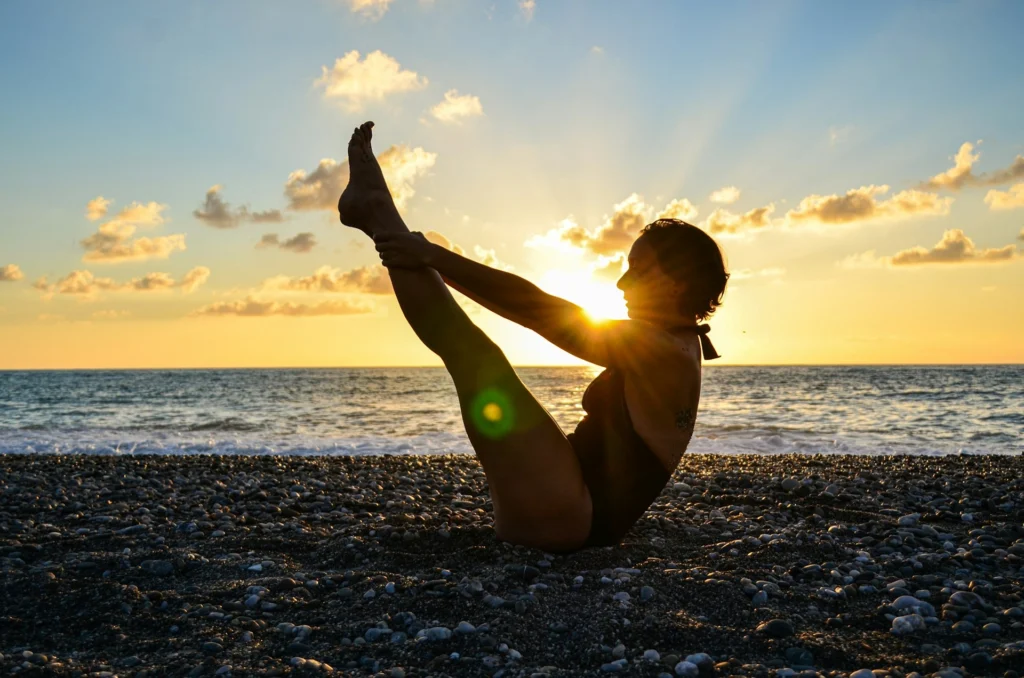
Alt text: A silhouette of a woman performing a boat yoga pose on a pebbly beach as the sun sets
Photo tag: power yoga for flexibility
Navasana, or the boat pose, is a great core workout. To perform a classic version of the move, you balance on your hip bones, lifting your legs and torso into a “V” shape. Extend your legs and point your toes to increase the intensity of this move. The most important element is to maintain a straight spine.
Some variations are gentler on your lower back. The easiest method is to bend your knees, keeping your calves parallel to the floor. This move is known as the tabletop position. You can also lie flat on your back, elevating only your shoulders and heels off the floor.
Here are the most commonly asked questions about power yoga.
Power yoga builds muscle because you use your own body weight to perform dynamic flows and hold poses. It also works on the body’s major muscle groups.
It depends on your current level of strength and flexibility. Power yoga is fast-paced and raises your heart rate. You need strength and endurance to execute poses effectively.
Power yoga can support strength training. Whether or not it can replace it depends on your goals, session intensity and progression.
Power yoga may offer the ideal one-two punch of strength training and flexibility, perfect for an active lifestyle. Try adding some power yoga moves to your conventional gym workouts today. Better yet, step into your nearest class and gain mental discipline while toning your body.
Originally published February 20, 2023. Updated September 3, 2026.ng your body.

Your email address will only be used to send you our newsletter, and at any time you may unsubscribe. For more information, see our Privacy Policy.
