


Body + Mind is reader-supported. We may earn an affiliate commission when you buy through some of the links on our site.
Plyometrics may make you think of elite athletes and high boxes. For years, only the pros had access to this workout method. However, you can bring these tactics home or to your local gym. Here is a guide to demystify the plyometric workout and rewire your body for power and functional fitness.

Plyometrics emphasizes speed and movement to build your muscles. The wide range of this workout philosophy attracts people, as numerous exercises fall under its umbrella. Running, doing pushups or throwing a football count in this regimen. You can use this regimen to get in shape or even rehab your body.
The magic of plyometric exercises is that you can do them with equipment or leave it behind. Regardless, the goal is to train your muscles to exert maximum force in short bursts. You could compare it to a rubber band and its phases.
Jumping on and off a platform is a seemingly simple process. However, the inside of your body involves sophisticated biological processes. You’re fundamentally changing your capacity for power by building faster and more efficient muscles. However, plyometrics workouts go the extra mile by shaping your nervous system.
Plyometrics improves nervous system function, enhancing performance. When you make powerful movements, you send messages to the brain and teach your central nervous system. From jumps to pushups, you signal your body to recruit muscle fibers more rapidly. As you train, you tell your body to apply strength instantly.
Deciding whether plyometrics is the right fit depends on your current fitness level and goals. While professional athletes gravitate toward these workouts, you can do them safely at home.
The ideal candidate for plyometrics has an established exercise foundation. You may have been consistently working out for about 6 months and are comfortable with body weight movements. If your progress on squats and lunges has stalled, you could use these workouts to better your physique.
While the objective is increasing strength, you can use plyometrics to train for long races, whether a 5k or a marathon. This exercise philosophy helps your running economy by training your body to use less energy every stride. Therefore, you can run faster and longer before feeling fatigue.
If you’re ready to harness plyometrics, the key is to master foundational movements to build coordination. Then, you can move on to more challenging exercises to get even stronger. Here are five workouts to achieve the body you want.
High knees are an excellent example of the stretch-shortening cycle (SSC). Repetitive explosive motions strengthen your tendons and increase your explosiveness. Each high-knee repetition requires maximum velocity and force and trains your fast-twitch fibers.
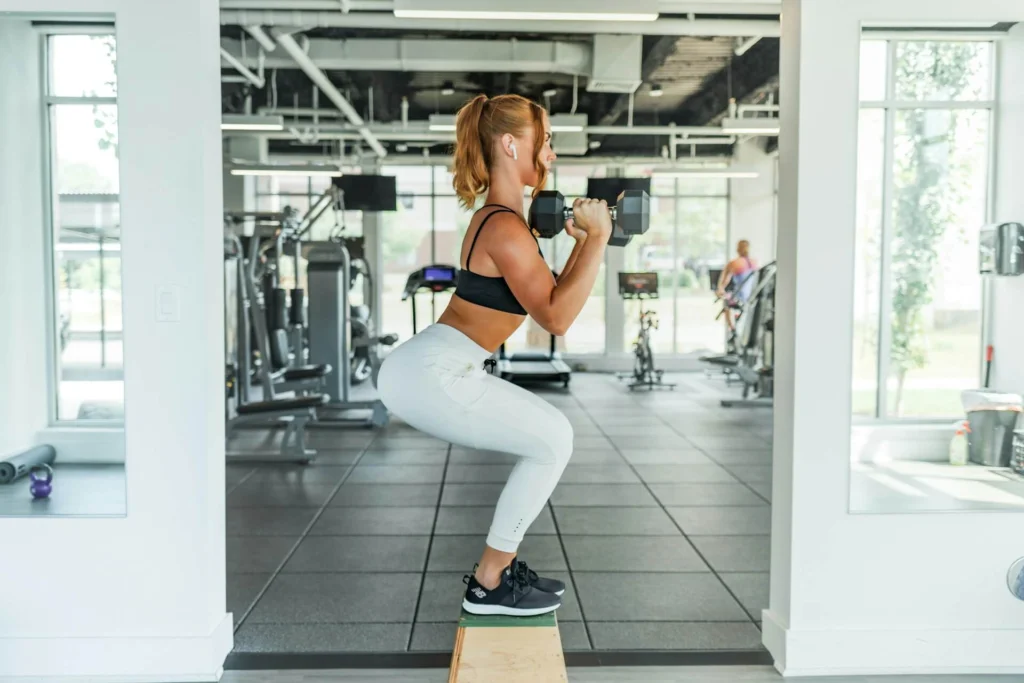
Squat jumps build SSC quickly by forcing your body to perform an explosive jump. Each jump stretches your muscles with a quick push-off to contract them. Therefore, your body can use the stored energy for higher jumps. Overall, the exercise builds cardiovascular endurance and lower-body poor.

Box jumps are among the top plyometric workouts for athletes of all capabilities. The exercise is pretty simple — all you have to do is jump on a box. If you’re a beginner, you should lower the platform to make it easier. Once you get better, you can increase the height to build even more power.
Glute workouts are essential for strengthening and stabilizing your hips. If you do butt kicks, you can strengthen and tone this area of your body. They’re similar to donkey kicks, though you’re performing them on all fours. In this variation, you’ll keep your legs straight instead of bent.
Single-leg hops embody plyometric workouts by integrating rapid and explosive movements. While simple, they’re effective and excellent for leg strength. Each rep forces one leg to manage your body weight independently and increase neural demand. You’re also improving your sprinting speed and jumping performance.
Beyond the impressive looks of box jumps, plyometric training upgrades your body’s performance. The explosive movements build muscle in the traditional sense while also making your nervous system more efficient. Furthermore, you experience benefits in the long run.
A 2024 International Journal of Sports Studies for Health said plyometrics increases your confidence and motivation while enhancing mental resilience. Its association with enhanced muscle strength, speed and jumping makes it among the best workout routines on the planet.
Training like the pros requires hard work and pushing your body to its limits. Plyometric workouts were once reserved for elite athletes and were less accessible. However, they’re among the best ways to unlock functional strength. Use at-home workouts, such as squat jumps and high knees, to increase explosiveness. The secret ingredient, ultimately, is using the power you already have.
Your email address will only be used to send you our newsletter, and at any time you may unsubscribe. For more information, see our Privacy Policy.
