
Body + Mind is reader-supported. We may earn an affiliate commission when you buy through some of the links on our site.
The front squat vs. back squat debate isn’t about which exercise is superior. It’s about understanding how each movement challenges your body, what it develops and how to execute it correctly. When performed well, both lifts build strength and control. When performed poorly, they can reinforce bad habits and slow progress.
Bar placement is the defining factor in the front squat vs. back squat comparison, as it directly influences how your body moves through the lift.
In the front squat, the bar sits across the front of the shoulders. This position forces an upright torso and shifts the center of mass forward. As a result, the knees travel further forward and the hips stay closer to the heels. This movement pattern demands constant core engagement and precise control, especially at the bottom of the lift.
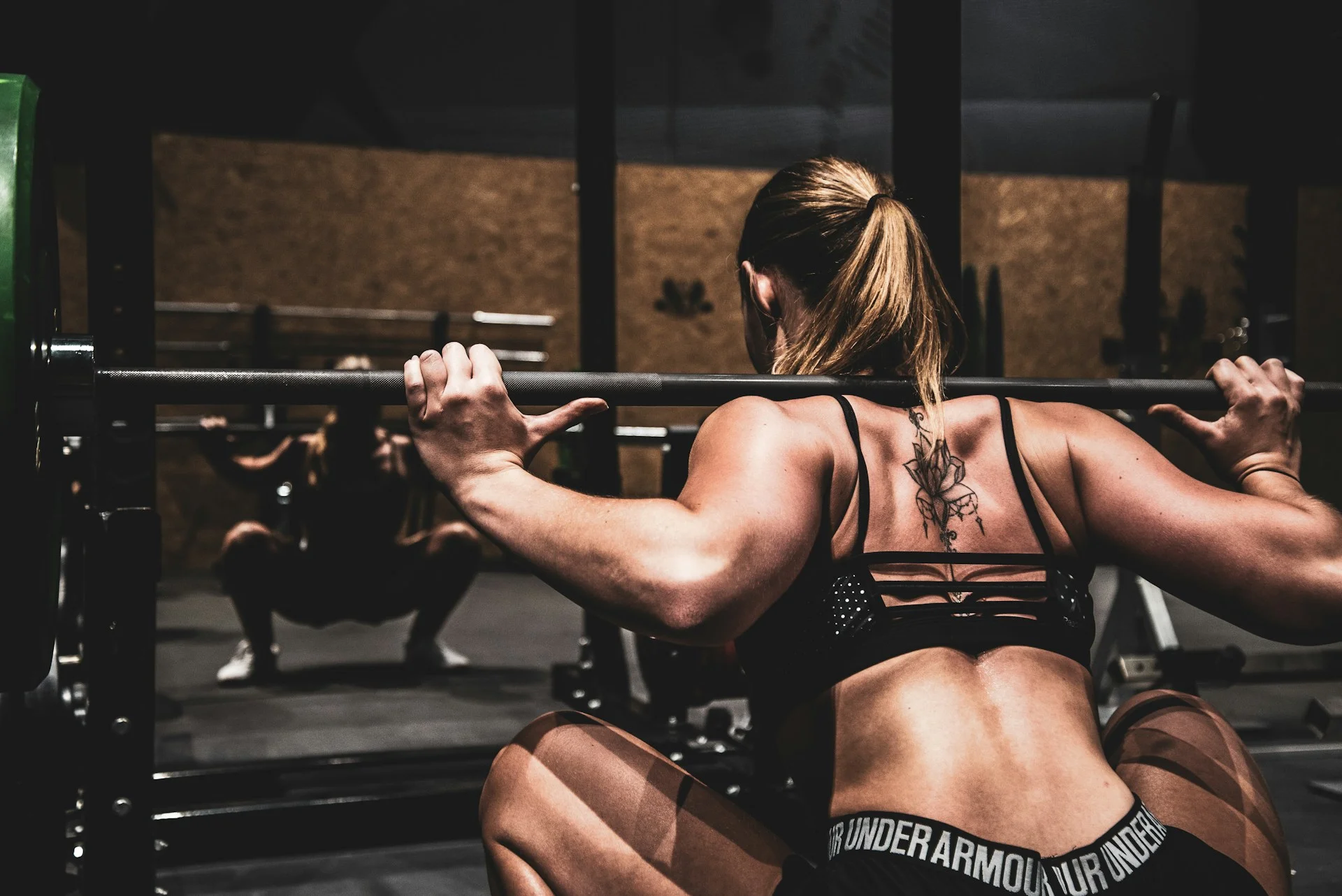
In the back squat, the bar rests on the upper back. This allows for more forward torso lean and greater hip involvement. The hips travel further back, reducing knee flexion and increasing the contribution of the posterior chain. This mechanical advantage explains why the back squat feels more stable and powerful for most lifters. It’s also easier to lift heavier and build greater strength than with front squats.
Muscle recruitment is where the front squat vs. back squat debate becomes especially relevant for program design. Front squats place a strong emphasis on the quads and glutes. Because the torso remains upright, the quads must work harder to extend the knees and drive the body forward. At the same time, the core and upper back are heavily involved to prevent the chest from collapsing forward.
Back squats distribute the load across more muscle groups. The glutes and hamstrings take on a greater share of the work, supported by the lower back and adductors. This wider distribution allows for heavier loads and makes back squats particularly effective for overall lower-body strength and hypertrophy.
When evaluating different types of squats for pure strength output, the back squat typically allows for heavier lifting. The bar position and hip-dominant mechanics create a more efficient lever system, enabling lifters to generate greater force. This makes the back squat a staple in powerlifting and general strength training programs. You can even combine this movement with an overhead press to further strengthen your muscles.
Front squats, while usually performed with lighter loads, develop a different type of strength. They challenge positional integrity and expose weaknesses in posture, core stability and quad strength. For many athletes, improving front squat strength translates to better performance in other lifts and sports movements.
Mobility requirements play a major role in the front squat vs. back squat discussion. Front squats require sufficient ankle mobility, thoracic spine extension and shoulder flexibility to maintain a secure rack position. Poor mobility often leads to elbows dropping, excessive forward lean or difficulty reaching depth.
Back squats are a lot more forgiving. They allow greater flexibility in stance width and torso angle, making them easier to learn and perform consistently. However, this forgiveness can also mask technical flaws, such as excessive forward lean or weak core engagement.
You should also consider joint health when choosing which squat to do. Front squats generally place less compressive stress on the lower back because the torso is upright. This makes them a valuable option for lifters managing lumbar discomfort, provided knee health isn’t compromised.
Back squats place more load on the hips and spine, particularly at heavier weights. When performed with proper technique, they’re safe and effective, but poor form or fatigue can increase the risk of injury. Individual anatomy and injury history should always guide squat selection.

Proper execution is essential, as small errors can quickly compromise the lift.
Understanding errors is essential as front squats punish poor positioning quickly.
The back squat allows for heavier loading but still demands precise technique.

Back squats may seem easier, but there are some technical flaws you should avoid.
Each lift serves a distinct purpose, and both deserve a place in a well-rounded training program. Front squats teach control, posture and precision. Back squats build power, confidence and strength. When you understand how and why to use each one, your training becomes more intentional and balanced.
Your email address will only be used to send you our newsletter, and at any time you may unsubscribe. For more information, see our Privacy Policy.
