

Body + Mind is reader-supported. We may earn an affiliate commission when you buy through some of the links on our site.
One second you’re lunging for a drop shot at the kitchen line, and the next your calf feels like someone flicked it from behind. Pickleball welcomes almost anyone onto the court, but that easy entry point can leave players nursing a sore heel, ankle, shoulder or elbow. Knowing the common trouble spots helps you play more games and spend less time sidelined.
The short answer is that far more people are playing, and many start later in life. Once tied mostly to senior living communities, pickleball now draws players of all ages, thanks to a small court, easy-to-learn rules and gear that costs far less than most sports. That accessibility draws in players who may have been away from sports for years.
The latest pickleball injury statistics reflect that growth. National emergency room data shows annual pickleball injuries rose from roughly 1,313 to 24,461 between 2014 and 2023. That jump makes sense when you consider how quickly the sport moved from a niche activity to a regular part of many community centers, gyms and local recreation programs.
Age may also play a big part in the pattern of pickleball injuries on the rise. In a 10-year national review, players ages 65 to 80 accounted for 61.1% of injuries, and falls caused about 65.5% of cases. Add quick stops, sudden lunges and side-to-side shuffling, and the game asks a lot of your body in short bursts.
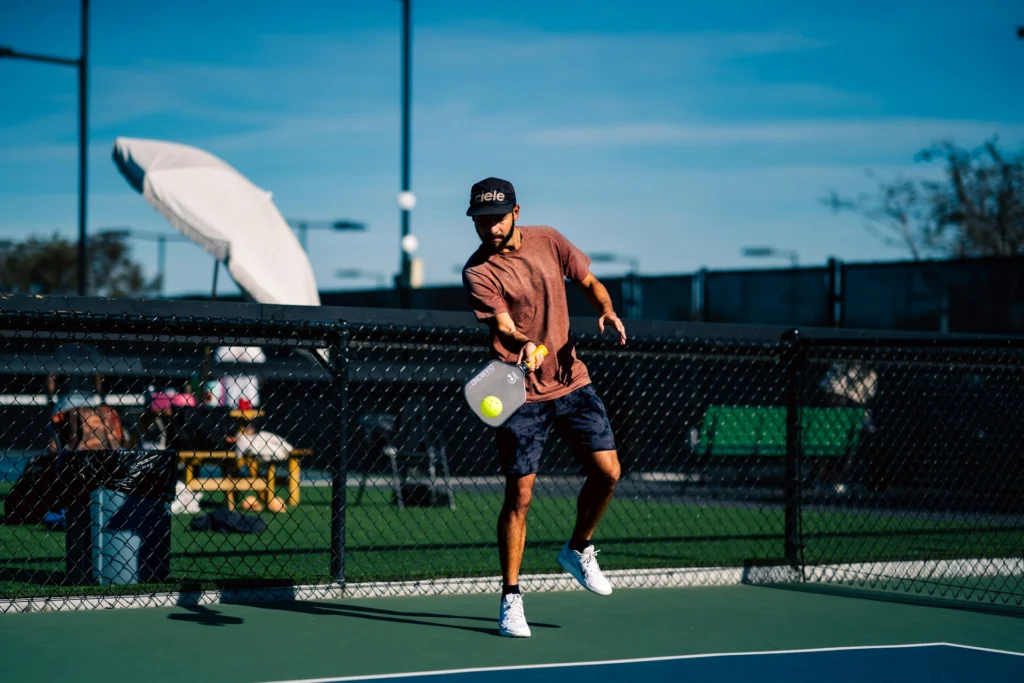
The most common pickleball injuries tend to cluster around a few spots on the body. Some happen in a split second. Others build slowly over weeks of play. In that same national review, fractures made up 32.7% of injuries, with strains and sprains close behind at 30.8%. Here’s where trouble usually starts.
Your Achilles tendon connects your heel bone and calf muscles, so it works hard every time you push off. In one clinic’s review of pickleball foot and ankle cases, Achilles tendon ruptures made up 39.4% of diagnoses, and calf muscle injuries added another 16%. Those injuries grew 6.5-fold from 2019 to 2023, often while players were running or lunging for the ball.
A short dink over the net can force your calf to fire fast from a standstill. A warm, flexible calf handles that load better than a cold one. Many players say an Achilles or calf injury feels like a kick to the back of the leg. If you feel that pop, stop playing and get checked.
Much of pickleball happens at the kitchen line, where quick lateral moves keep your ankles busy. A sprain can happen when your foot plants and your body keeps moving, rolling the ankle outward and stretching the outside ligaments.
Doubles add another wrinkle when late calls or sudden lunges force awkward side steps. Running shoes can make this more likely because they’re built for forward motion, while court shoes with a wider base and firm sides offer better support during quick cuts.
Shoulder trouble usually creeps in slowly. Overhead serves, smashes and long rallies ask the rotator cuff to work again and again, which can irritate the small muscles and tendons around the joint. Shoulder cases show up in the research, though in smaller numbers. One outpatient study of upper-body pickleball injuries found the shoulder accounted for 4.1% of injured sites, and falls can also strain the joint when you land on an outstretched arm.
A recreational player survey ranked elbow pain as the most common overuse injury. Pickleball elbow is the same condition many people know as tennis elbow, or lateral epicondylitis. Repeated gripping and swinging can strain the tendons on the outside of your elbow.
Wrists are usually injured in various ways. When you trip or backpedal and fall, your hands shoot out to catch you. Among upper-body ER visits, wrist injuries accounted for 45%, and fractures accounted for 68.7% of all upper-body cases.
A few simple habits go a long way. Start with five to 10 minutes of calf raises, side shuffles, arm circles and easy dinking to wake up the muscles and tendons that take the most load. Gentle stretching afterward helps too, and flexibility moves like shoulder rolls fit easily into the walk back to your car.
Next, think about shoes and footwork. Court shoes built for lateral movement keep you steadier at the kitchen line than running shoes do. Stay in a ready position with your knees slightly bent and your weight on the balls of your feet. When a lob sails over your head, turn and move sideways or let your partner take it instead of backpedaling, since stepping backward blind is a common way to fall.
Finally, pace your court time. If you jump in cold and play for three hours, soreness can show up fast. A smarter morning might look like this:
Plenty of pickleball injuries heal well with conservative care, and physical therapy often sits at the center of that plan. Physical therapists can design recovery or prevention exercise plans around the way you move on the court, whether that means calf and Achilles loading after a strain, balance drills after an ankle sprain or forearm strengthening for a cranky elbow.
The goal is a safe return to the game with a lower risk of the same injury recurring. ER visits tied to pickleball nearly doubled between 2020 and 2022, according to a national study, so it is worth treating small aches as early warning signs rather than waiting until they disrupt your routine.
A therapist can also spot weak links early, such as stiff ankles or a shoulder that tires quickly. That help often goes unused. In a recreational player survey, most people with overuse injuries never sought medical attention, letting nagging aches linger longer than needed.
Here are quick answers to the questions players ask most.
Achilles and calf strains, ankle sprains, shoulder overuse, elbow pain and wrist fractures top the list. One foot and ankle study found Achilles ruptures were the top diagnosis among pickleball players. Fractures and sprains are most common in ER data, while elbow pain is most common among overuse injuries.
More people are playing, and many newer players are older adults returning to sport after a long break. Falls, quick lunges and lateral shuffles account for a large share of injuries.
Yes. A short warmup, proper court shoes, smart footwork and steady playing time all help. If pain lingers, a physical therapist can develop a plan to get you back on the court safely.
Pickleball gives you a fun workout, a social circle and a reason to get moving. Your heels, ankles, shoulders and elbows carry a lot of that load, so treat them well. Warm up, wear court shoes and take rest days when something feels off. Small habits like these help you stay in the kitchen and out of the clinic.

Your email address will only be used to send you our newsletter, and at any time you may unsubscribe. For more information, see our Privacy Policy.
