

Body + Mind is reader-supported. We may earn an affiliate commission when you buy through some of the links on our site.
Gel nails have been catching strays on TikTok lately. One video says they’re toxic and another assures they’re totally fine. Somehow, you’re left holding a UV lamp and a tiny bottle of panic. All you need is to be able to sort the viral warnings from the verified facts so you can keep your shine and stay smart about your health.
Gel is basically a plastic coating that cures hard when it hits UV or LED light. Regular polish dries by evaporation, so it air dries and chips faster. Gel sets through a chemical reaction, which is why it looks glassy and lasts longer. It’s also why people started asking what was in gel polish.
Gel manicures went viral because a few things landed at the same time. Dermatologists have been warning for years about rising nail allergies tied to methacrylates in gel and acrylic systems. So, the minute TikTok started circling ingredients and “burning” stories, the warnings felt new, even though they had been sitting in plain sight.
Also, a gel manicure can be filled with many mistakes, like some polish on the skin, under-curing because you’re in a rush or overfilling because the old set will not budge. Those tiny moments are where the gel nail risks actually occur.
There is a key difference between gel and acrylic systems, too. Gel polish is applied like regular nail polish, then cured under the lamp. Acrylic is a gel nail alternative consisting of a powder and liquid system that hardens through chemistry in the air. Regular polish air dries and removes easily. Gel and acrylic tend to last much longer than regular polish, as they involve stronger ingredients and stronger removal.
There are a few risks that show up over and over again in dermatology and clinical write-ups. And the biggest one is not UV, but an allergy.
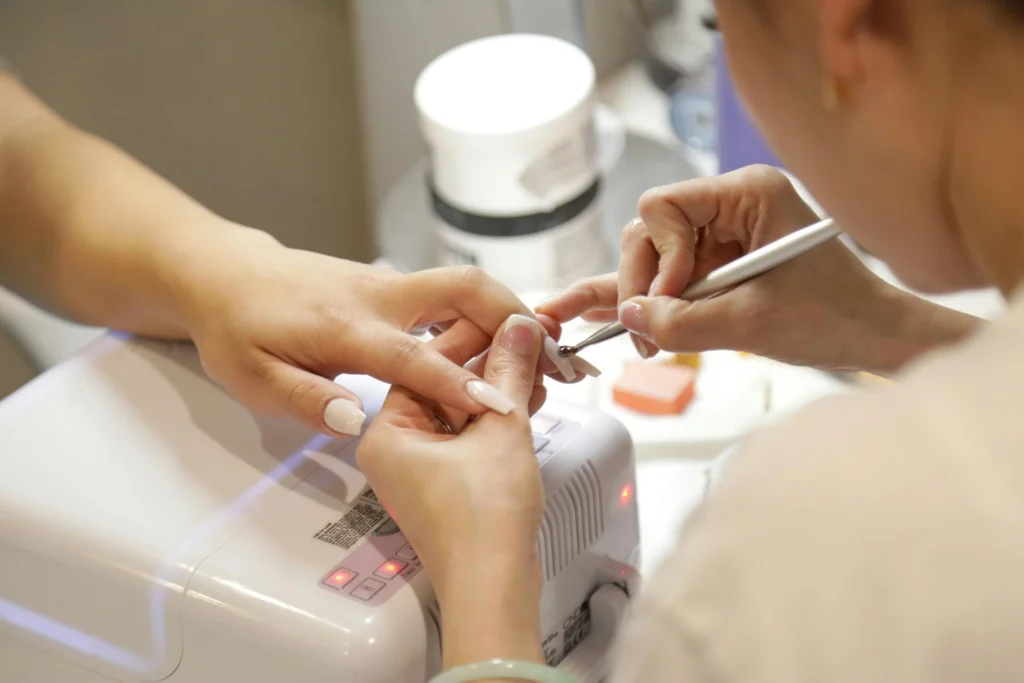
Gel nail polish risks are often about sensitization, meaning your immune system learns to hate a chemical after repeated skin exposure. With gel systems, the usual suspects are acrylates and methacrylates. When an uncured product touches your skin or when a product is under-cured, it stays partly reactive. That can trigger itchy, swollen skin around the nail. Sometimes, it can spread to the eyelids and face, too.
Sometimes, it becomes a long-term allergy you carry into other parts of life, like dental work or medical adhesives. The British Association of Dermatologists has repeatedly warned about allergic reactions linked to artificial nails and at-home kits.
At home, you’re doing your own cuticles, cleanup and cure time. It’s very easy to flood the sidewalls and cure gel that is sitting on the skin. It’s easy to use a lamp that doesn’t match the brand’s chemistry. That mismatch can lead to under-curing and that means more leftover reactive material.
Sometimes hospitals push back on gel nails due to infection-control concerns. Other times, it’s pure practicality and sometimes it’s monitoring. Gel and some polishes can interfere with oximetry readings in certain situations. One study found that gel-based manicures could overestimate readings, potentially delaying the detection of low oxygen levels.
People heard “ban” and assumed gel itself was done. That’s not exactly what happened. The EU action is about a specific ingredient called TPO that shows up in some UV-cured nail products. TPO is used as a photoinitiator and helps the gel harden when light hits it. So, yes, it is linked to curing, but no, it doesn’t mean every gel polish on earth is suddenly illegal.
The European Commission explains that TPO was classified as a reproductive toxicant under EU chemicals law. That classification then triggered its addition to the prohibited list for cosmetics, with the effective date being September 1, 2025.
So when people ask if all gel nail polishes contain TPO, the answer is that only some formulas do. Since September 2025, EU products have had to reformulate or leave the market if they contain TPO.
If you’re outside the EU, you will still see the ripple effects. Brands that sell globally, including major players like OPI, known for iconic shades, often prefer a single compliant formula across multiple regions. You may notice ingredient changes, see TPO-free marketing and see confusion because old stock and gray-market imports can linger. Industry coverage has been pretty direct about how the EU is reshaping product development.
UV is a scary word, which means this has gained a lot of traction online. Still, the risk with UV is dose and frequency. A lamp session is short and the exposed area is small. Yet the research is still evolving and some findings are worth taking note of.
Lab studies have shown UV nail dryers can cause DNA damage and mutations in cells under experimental conditions. That doesn’t automatically translate into real-world cancer risk for the average person, though.
Lamp output also varies. One scoping review in the dermatology literature notes variability across devices and highlights a gap between lab exposure setups and typical manicure use. All that means is that lamps are not all the same, but neither are your habits. Pick easy protections like applying broad-spectrum sunscreen to your hands 15 to 20 minutes before curing — physical sunscreens containing zinc oxide or titanium dioxide are a great choice as they create a physical barrier to reflect UV rays — wearing UV-protective fingerless gloves so only your nails are exposed and keeping sessions efficient and don’t over-cure your nails.
You can keep doing gel manicures. You just need a few safety precautions to keep your nails and skin healthy. Most risks with gel nail polish come from repeated exposure and messy application.
Before you book or buy:
During application:
Take precautions:
Gel nails are not the cartoon villain TikTok sometimes makes them out to be, but they’re not totally harmless either. The real story sits in the middle. Skin contact with uncured product is where many of the “dangers of gel nails” actually begin. Under-curing and aggressive removal add fuel. UV exposure from lamps is worth respecting too, even if the average use risk looks lower than the panic posts suggest. So, keep the manicure if you love it, just do it like someone who knows the facts and likes their cuticles.

Your email address will only be used to send you our newsletter, and at any time you may unsubscribe. For more information, see our Privacy Policy.
