


Body + Mind is reader-supported. We may earn an affiliate commission when you buy through some of the links on our site.
Darkness retreats are gaining popularity as an answer to the modern dilemma of constant connectivity and sensory overload. This radical option aims to counteract the “always on” nature of modern life and to reconnect people with their inner selves. But what exactly does it involve, what are the benefits, and how can you know if it might be a good fit for you?
Essentially, it involves spending time alone — from a few hours to a week — in a lightproof room with no other external stimulus. Typically, these rooms are purpose-built, and contain a bed, toilet, table, chair and shower, but not much else. Some retreats take place in caves. All are designed to eliminate external sensory input.
Your only contact during the retreat will be with the “guide,” who will bring you food, check on your well-being and, if you wish, talk through your experiences with you. The purpose of a darkness retreat is to facilitate rest, introspection and heightened inner awareness.

Both science-backed data and anecdotal evidence prove that voluntary sensory deprivation has several benefits.
First and foremost, your body reacts to the absence of stimulation. Many people experience an increase in heart rate variability (HRV), indicating a shift toward a more relaxed state where the body’s parasympathetic nervous system is activated. This facilitates deep rest, which supports the body’s natural healing processes — one of the key benefits of sensory deprivation.
Meanwhile, darkness stimulates the production of melatonin, the sleep hormone. Over time, during the retreat, this can help to reset your circadian rhythm and enhance your natural sleep-wake cycle.
The absence of stimuli can lead to reduced stress and anxiety, as your chronically overloaded brain calms and resets. Research has shown that as little as three hours in a specially designed chamber can reduce perceived stress for at least one week.
The cognitive theory of predictive processing posits that our brains constantly make predictions to understand the world. In dark therapy or during darkness retreats, there is no sensory data to check those predictions against.
This lack of input is psychologically challenging and forces the brain to rely more heavily on internal sources such as prior beliefs, cultural learning, memories and expectations. This process of working through difficult emotions is a key benefit for many retreat participants.
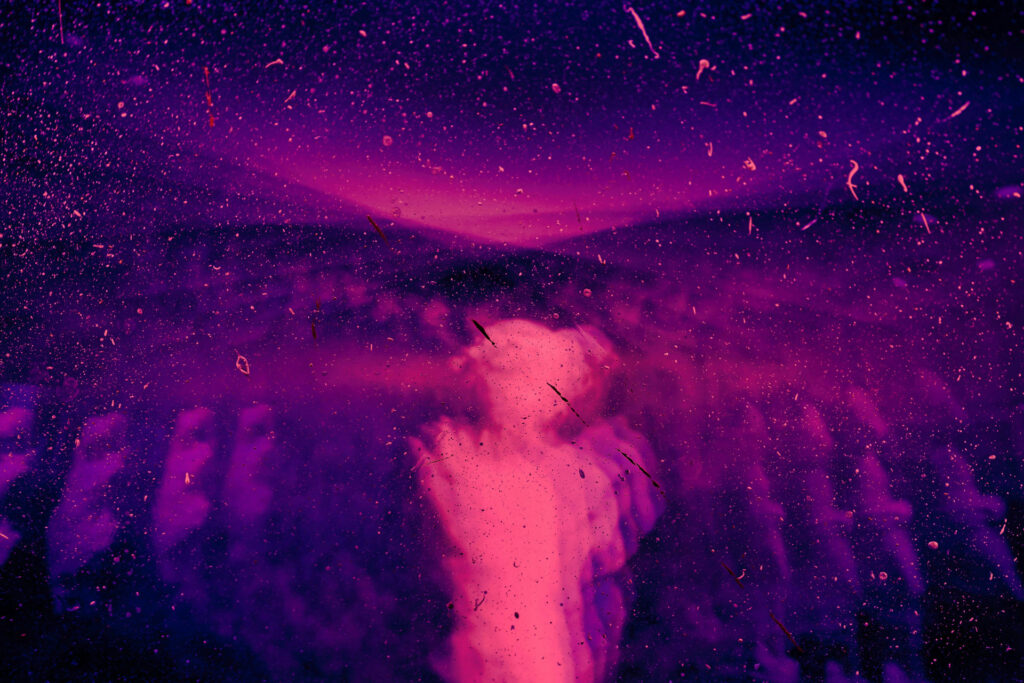
During sensory deprivation, participants frequently experience altered states of consciousness (ASCs), which might include:
These are comparable to some psychedelic experiences and have much the same benefits. These ASCs facilitate creative thinking because the brain no longer feels bound by logic or preconceptions.
Effectively, the mind reorganizes what it already knows about your life, your problems and your needs. This is in contrast to constantly taking on new information and trying to make it fit. The reshuffling without fresh input allows a rare level of self-insight. Among the many benefits of sensory deprivation, this is one people tend to cherish long after the experience ends.
A typical experience tends to move in stages.
Initially, there is a period of adjustment. Humans are hard-wired through evolution to be wary of the dark — once, our survival depended on it. You can expect to feel unsettled, uncomfortable, perhaps a little scared. As you become accustomed to the absence of light, you will likely start to feel restless and bored, especially if you are normally always on the go or attached to a device.

This is where the process starts to get interesting and where the real benefits of dark therapy emerge. As your mental chatter quietens and you move into a deeper state of consciousness, you may well experience vivid dreams or visions, including phantom lights or auditory phenomena.
You may feel deeply emotional. Your senses are now on high alert, making food taste more intense and textures feel more alive. It’s common to experience a “collapse of time”, where you will lose track of what day or time it is, or how long has passed.
When the retreat ends, many people report experiencing a powerful feeling of a symbolic “death and rebirth.” You may find that you are more appreciative or even in awe of what you can see around you, however mundane. Darkness retreats can change people profoundly, so don’t expect to quickly return to normality — but that’s a good thing, if you have reaped the benefits of sensory deprivation.
This is a highly personal decision. Darkness retreats are definitely not for everyone, and some people will get more from one than others.
Those who might benefit the most include:
Anyone with a history of severe mental health conditions should be very cautious and seek professional advice before booking this type of intense experience. If you have psychosis or schizophrenia, you may find it stressful, counter-productive or harmful.

If you are handling depression or anxiety, you might benefit a great deal from the experience, but only if you have the type of personality that can tolerate the initial discomfort and unsettling transition.
This emerging field is unregulated and by its very nature, you are putting yourself in a vulnerable position, in the dark, where you may not be as aware of red flags or as consciously on the ball as you normally are. If you would like to try it, it’s vital to do your homework thoroughly and choose only a reputable operator.
In particular, pay attention to the experience and credentials of the guide. Research has shown that people’s experiences are much more valuable when they are in the care of a knowledgeable, experienced and empathic guide. Your trust in this person should be nonnegotiable, so listen to your instincts about who to avoid.
Beyond evaluating the guide, there are several other important considerations.
Before taking on this experience, you will likely have a lot of questions. Here are some of the most common.
No. Many of the principles involved are similar, but in a flotation tank you typically float for no more than an hour. Most darkness retreats take days — with no water involved.
You will have a table and chair in your room. There is usually a lightproof hatch through which the guide will pass your food, water and utensils. Food is usually simple but nourishing.
Yes, it can be scary initially, or at least unsettling, but most people find that quickly subsides, often replaced by boredom or irritation until deeper experiences kick in. Obviously, if you have a deep fear of the dark, this is not the right choice for you. If someone panics or needs to exit the room for any other reason, retreats always have an emergency cord or intercom. Ask about this before you book.
No. Everyone is different. Research suggests that these phenomena are very common, but not universal. Even without that side of the experience, however, most people do experience clarity, deep rest and a new perspective on their lives.
While a week in total darkness may sound extreme, there are real, science-backed physical, psychological and emotional benefits — and, for many, also a spiritual benefit too. In our digitally overloaded world, darkness retreats may just be the ultimate unplug. What might you discover if you intentionally created a period of silent darkness in your own life? The ultimate lesson of such a retreat isn’t about the dark itself, but about the light it reveals within you.
Your email address will only be used to send you our newsletter, and at any time you may unsubscribe. For more information, see our Privacy Policy.
