

Body + Mind is reader-supported. We may earn an affiliate commission when you buy through some of the links on our site.
In a world of wellness apps and devices, sometimes the most effective tools are the simplest ones. Weighted stuffed animals offer the comfort of a childhood companion with science-backed benefits for stress relief, better sleep and improved focus. These tactile tools work by calming your nervous system through gentle pressure. Here’s how to choose and use a weighted friend to support your daily well-being.
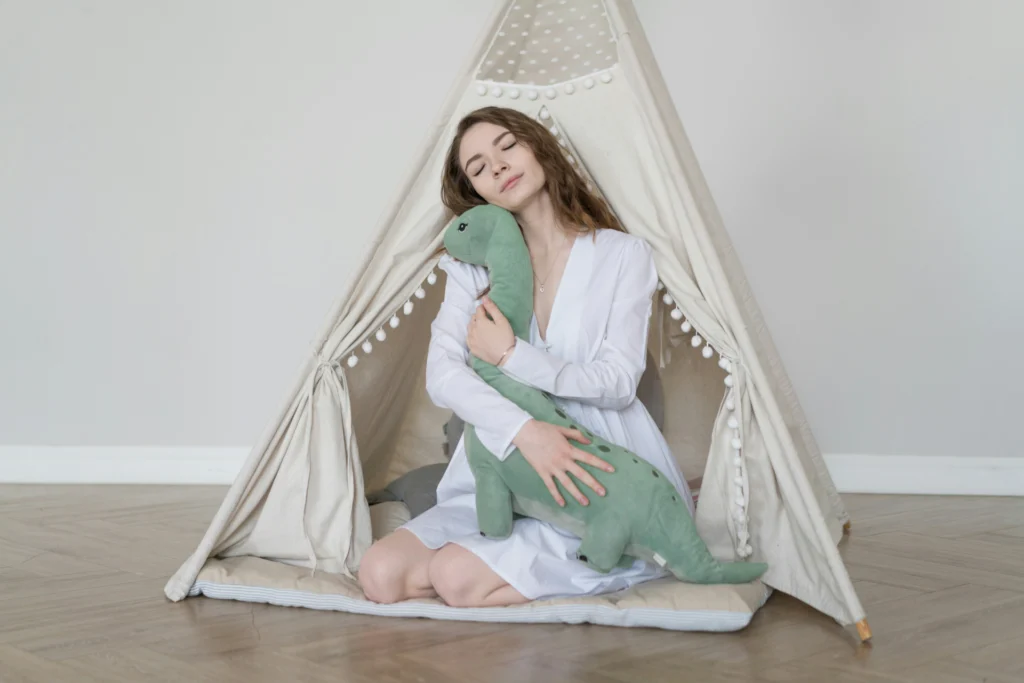
The calming effect you feel when holding a weighted stuffed animal is a real physiological response happening in your body. This mechanism is called Deep Pressure Stimulation (DPS). Think of it as the feeling you get from a firm hug or a cozy weighted blanket. When you apply gentle pressure to your body, something remarkable happens beneath the surface.
Deep Pressure Stimulation shifts the autonomic nervous system from a sympathetic state to a parasympathetic one. In everyday terms, your body moves from “fight-or-flight” mode into “rest-and-digest” mode.
Your sympathetic nervous system kicks in when you’re stressed, anxious or facing a deadline. Your heart races, your muscles tense, and your mind runs in circles. The parasympathetic system tells your body that you’re safe and can relax.
This shift creates a measurable state of calmness. Scientists track these changes through heart rate variability, which is the variation in time between each heartbeat. When your nervous system relaxes, this variation increases in a healthy way. You might notice your breathing slows down, your shoulders drop, and that tight feeling in your chest starts to ease.
Understanding the science behind weighted tools is helpful, but putting the concept into practice is where the real magic happens. You can create a simple mindfulness ritual with your weighted companion that takes just five minutes. This practice works beautifully as a morning reset, a midday break or an evening wind-down.
Here’s how to do it:
Even a brief practice like this can have meaningful effects on your well-being. Research shows that just five minutes of daily mindfulness can create positive changes in how your brain processes stress and emotion. When you pair this short ritual with the physical comfort of your animal friend, you’re giving yourself a powerful tool for managing everyday tension.
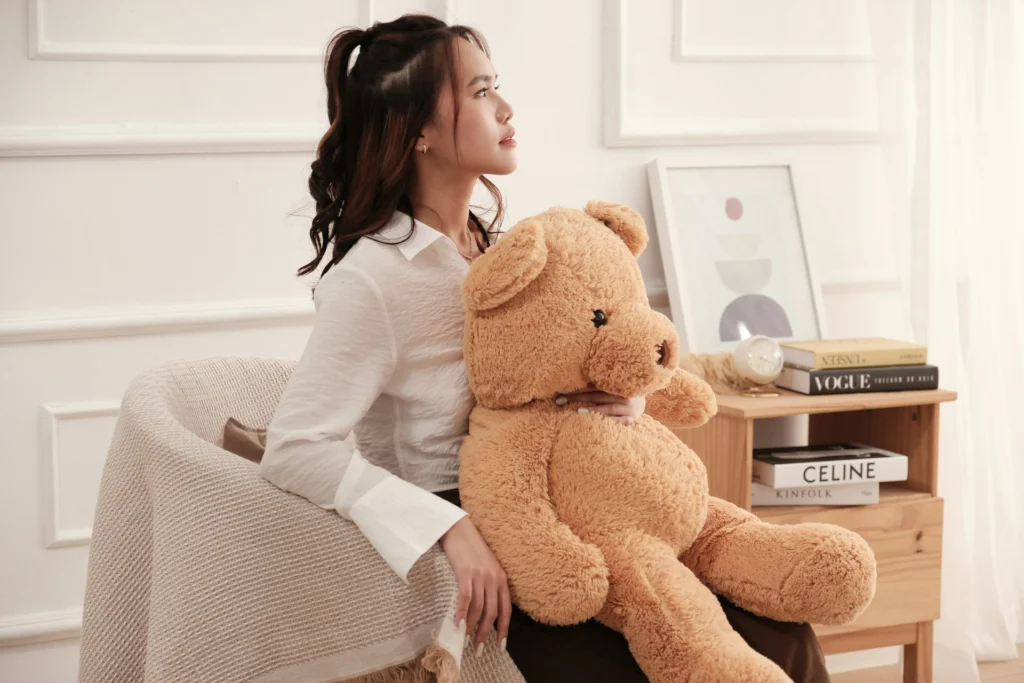
The benefits of this gentle tool extend well beyond a quick 5-minute reset. Once you have a weighted stuffed animal in your wellness toolkit, you’ll likely discover multiple ways to incorporate it throughout your day and night. Here are some popular options.
Many people use weighted stuffed animals as part of an evening wind-down routine, which can help prepare your body for rest. The same nervous system shift that happens during mindfulness practice also supports the transition into sleep. A recent clinical study found that using weighted items led to significant improvements in sleep quality and reduced both daytime sleepiness and fatigue.
Try placing your weighted animal on your chest or lap while you read before bed, or keep it nearby as a comforting presence as you drift off. The gentle pressure signals to your body that it’s time to move from the activity of the day into rest mode.
Remember how DPS works to calm your nervous system during moments of stress? That same principle applies to specific situations that make your heart race. Research has found that weighted tools helped patients feel calmer during anxiety-inducing procedures like a tooth extraction.
You can apply this to your own stressful moments. Holding your weighted friend before a big presentation, during a turbulent flight or while sitting in a waiting room for an important appointment can help take the edge off. It becomes a portable comfort object that travels with you into challenging situations.
If you struggle with a “busy brain” at work or while studying, a weighted stuffed animal can serve as an anchor for your attention. The gentle pressure helps quiet the mental chatter that makes it hard to concentrate on the task at hand. Many people also find that it reduces the urge to fidget, which can be distracting when you’re trying to focus.
Keep your weighted companion on your desk or workspace. When you feel your attention starting to scatter, take a moment to hold it in your lap. The grounding sensation can help you refocus and return to your work with renewed concentration.

This is a highly personal decision, but a few practical considerations can help guide your choice:
Weighted stuffed animals offer an accessible, science-backed approach to managing the stress and demands of modern life. They work by activating your body’s natural relaxation response through gentle pressure. You can use them for quick mindfulness resets, better sleep, situational stress relief and improved focus.
The beauty of this tool is its simplicity. No charging required, no complicated instructions and no screen time needed. As you explore your own well-being journey, remember that the best tools are the ones that fit naturally into your life and feel right for you. Your weighted companion might just become your favorite ally in creating moments of calm.






Your email address will only be used to send you our newsletter, and at any time you may unsubscribe. For more information, see our Privacy Policy.
