
Body + Mind is reader-supported. We may earn an affiliate commission when you buy through some of the links on our site.
Walking yoga offers a simple way to feel calmer, stronger and more connected in your daily routine. This gentle practice blends movement and mindfulness in a natural, accessible way. It fits easily into your day without needing special equipment or extra time. You simply take a walk and add intention. Each step becomes an opportunity to support your well-being. This practice isn’t about perfect poses, but about adding gentle awareness to your walk. It’s an easy, effective way to find peace and presence in a busy world.
Walking yoga is exactly what it sounds like — a simple, feel-good blend of walking and mindful movement. Walking is great for your body — and it can benefit your mind, too, when practiced mindfully outdoors. As you walk, focus on each step and notice the lifting and lowering of your feet. Instead of treating your walk as just a way to get from A to B, you turn it into a moving meditation.
You add gentle, yoga-inspired movements, intentional breathing and a stronger awareness of your body as you go. It’s less about perfect poses and more about how you feel in each moment. As you walk, you might pause for a stretch, roll your shoulders or match your breath to your steps.
Staying present means noticing your body’s rhythm and your surroundings — feeling your feet hit the ground, listening to birds, or observing thoughts without judgment. This relaxed, adaptable practice fits any pace or mood and requires no routine, special gear, or experience. Simply go outside and walk with intention.
Walking yoga turns a daily stroll into a practice that supports both physical and mental well-being. It adds mindfulness and gentle movement to the usual benefits of walking, helping you feel calmer and more connected to your body. At its core, it’s about slowing down, breathing deeply and being present so you can fully enjoy the experience of walking.
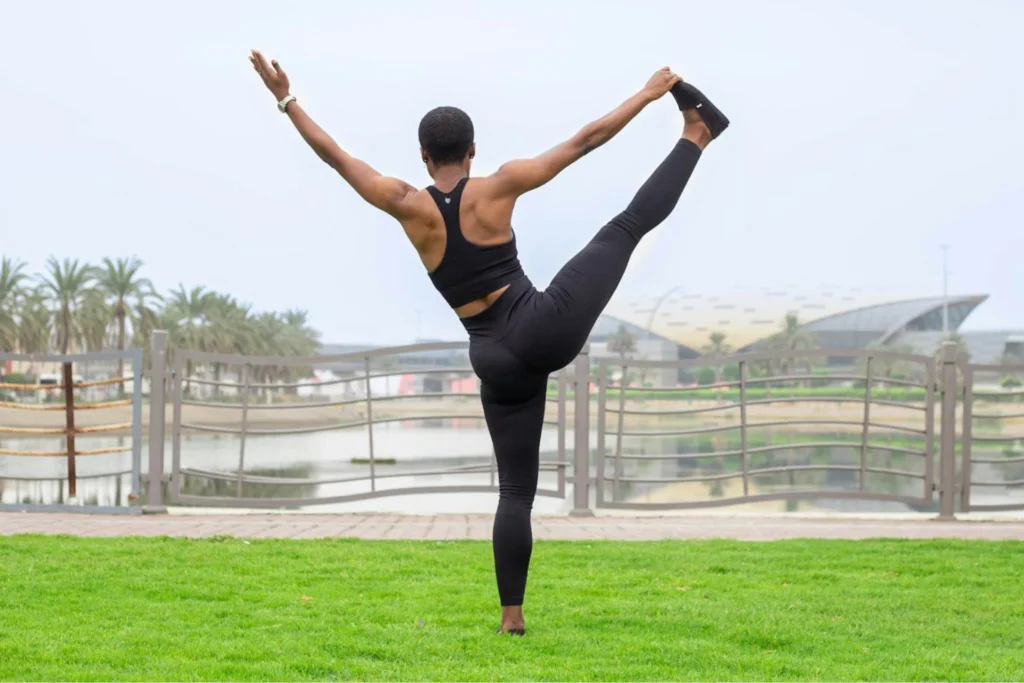
Yoga and walking are especially helpful for people with Type 2 Diabetes. Since this condition affects how the body uses insulin, regular physical activity, such as walking or yoga, can help manage blood sugar and improve quality of life.
Both walking and yoga are recommended by groups such as the American Diabetes Association for their positive effects on blood glucose levels. Combining mindful movement with walking can lower blood sugar, especially after meals and may also reduce stress, which supports blood sugar control.
Walking improves circulation, boosts energy levels and supports your physical health without needing a full workout session. Simultaneously, the breathing and mindfulness elements of yoga help you stay focused and calm during busy workdays. This combination makes walking yoga a practical, low-effort way to care for your health — even on your busiest days.
Walking yoga can also help reduce muscle tension and support overall physical comfort, especially if you deal with stiffness from daily activities or desk work. Yoga movements gently stretch and strengthen your muscles, improving flexibility and reducing tightness in areas like your neck and lower back.
The mindful and meditative aspects of yoga add another layer of support by helping your body relax. Controlled breathing and relaxation techniques can calm your nervous system, which plays a role in how you experience pain.
By combining walking with these gentle, restorative movements, you create a routine that supports both strength and relaxation. Over time, walking yoga may help you feel more comfortable in your body, move more freely and enjoy greater physical ease throughout your day.
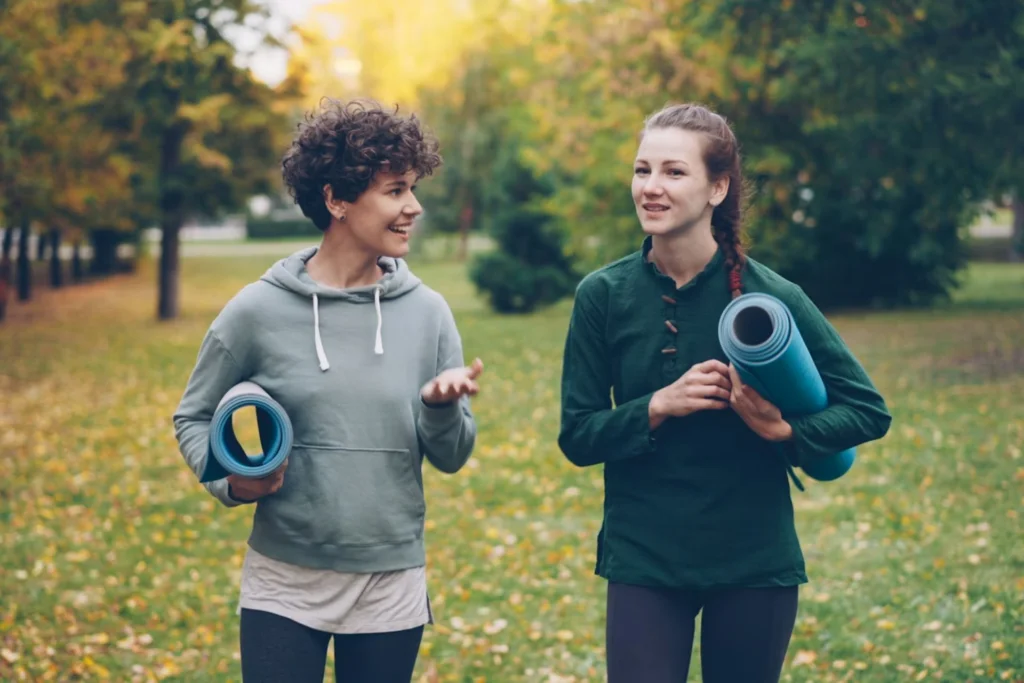
Walking yoga makes it easy to turn a simple stroll into a mindful, feel-good practice that supports both body and mind. Start by slowing your pace slightly and syncing your steps with your breath. For example, inhale for a few steps and exhale for a few steps to create a steady rhythm. This simple shift helps you stay present and grounded as you move.
As you walk, check in with your body. Notice how your feet connect with the ground, how your arms swing and how your posture feels. You build awareness without judgment, which is a key part of the practice. Every few minutes, pause to add a gentle yoga movement.
Try a side stretch, a light twist or a shoulder roll to release tension and wake up your muscles. Keep it simple and choose movements that feel good in your body. Pay attention to your surroundings — the breeze, sounds and colors. This awareness calms your mind and makes your walk more restorative.
Your session can be as short or as long as your schedule allows. Even 10 to 15 minutes of mindful walking yoga can improve how you feel. Stay flexible — there’s no perfect way, so let your practice adjust with your mood and energy. With consistency, walking yoga can reset your day, helping you move your body, clear your mind and find calm — all in a simple walk.
The practice blended classic yoga poses, like Mountain and Tree Pose, into outdoor walks, using simple movements adaptable to her pace. Its increasing popularity makes sense — combining walking with yoga supports heart health and muscle strength, while the mindfulness aspect reduces stress and improves clarity. For Katie and many others, walking yoga is a more accessible and enjoyable way to experience mindfulness without the pressure of sitting still.

Walking yoga turns small daily actions into meaningful results. It supports both physical strength and mental calm through a single, simple practice. You build consistency, awareness and balance over time. The flexibility of this approach allows you to move at your own pace. Each walk becomes a moment to reset and recharge. Step by step, you create a routine that feels good and lasts. Embrace the journey of turning an ordinary walk into an extraordinary ritual of self-care.
Your email address will only be used to send you our newsletter, and at any time you may unsubscribe. For more information, see our Privacy Policy.
