

Body + Mind is reader-supported. We may earn an affiliate commission when you buy through some of the links on our site.
Almost every woman experiences vaginal discharge. It is a normal bodily function produced by your reproductive system to help keep you healthy. In fact, it’s key information on your hormonal health. A healthy discharge cleans the vagina, provides lubrication, removes old cells and debris and protects the whole organ system against infection through a healthy pH balance.
What a healthy discharge looks like can vary from person to person, which can make it confusing for many. Here is a comprehensive guide to help you identify healthy discharge and signs that might be concerning.
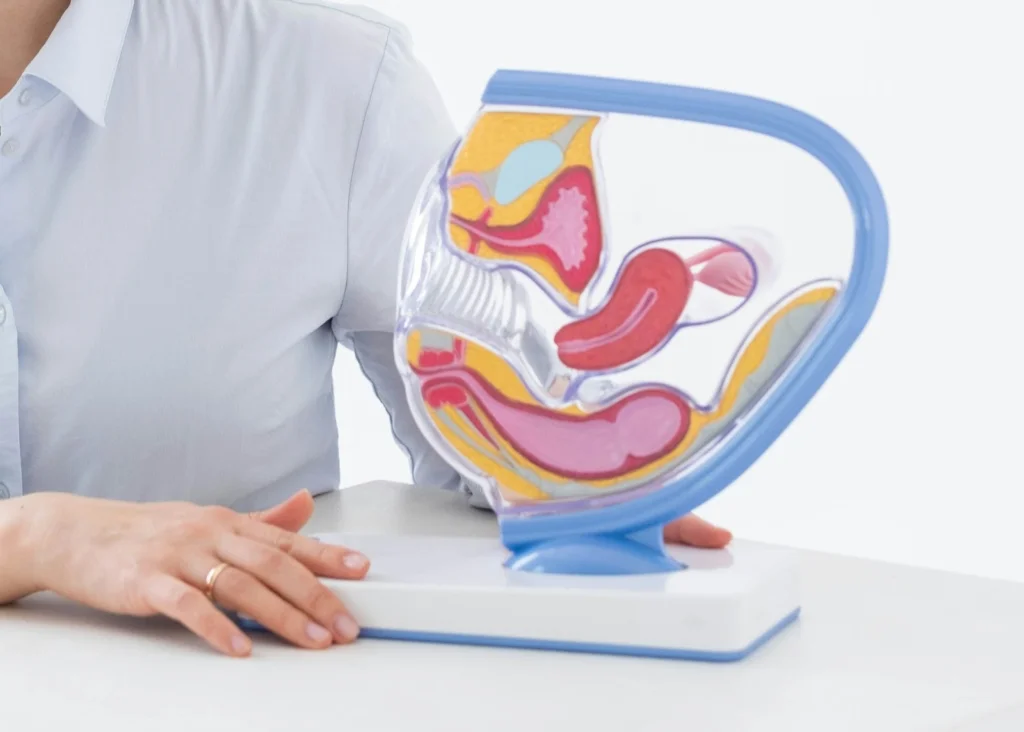
A normal discharge actually varies person to person throughout the whole menstrual cycle. One sign of healthy discharge is its color. Anything clear, milky white or off-white is normal. If you spot yellow discharge, that’s normal too, since your discharge might have turned yellow when exposed to air. Another factor to check is its consistency and texture. Anything that is thin and watery, thick and clumpy, cream-like, or stretchy like raw eggs points to a healthy and balanced system.
Consider the amount of discharge too, with healthy people producing up to a teaspoon worth of discharge each day. The volume might increase during ovulation and arousal. Additionally, healthy discharge should either be odorless or have a slight tangy scent. After all, the vagina’s natural environment is acidic. A discharge that smells like a strong, fishy odor can be a sign of concern.

The most important factor that affects your discharge is actually where you are in your menstrual cycle. Make sure to use tracking apps or systems is a great way to understand your body.
Blood flowing due to menstruation masks any discharge your vagina may produce. Additionally, the cervix produces little to no mucus at this stage.
On the days after menstruation, you have days when you have little discharge or have none at all. As ovaries begin preparing an egg, your estrogen level rises, which prompts the cervix to produce a discharge. It is sticky in consistency, which is either cloudy, white or yellowish in color.
Estrogen levels are at their highest right before ovulation. As such, the amount of discharge you get will peak at this stage. At this point, it will look clear, slippery and stretchy. A good example is the texture of a raw egg, which can be stretched between your fingers. Its main purpose is to help sperm cells swim toward the egg by lowering the vagina’s acidity.
After ovulation, progesterone becomes the dominant hormone. As a consequence, the cervix produces less discharge. At this phase, it will appear thick and creamy, forming a barrier in the cervix to prevent bacteria and sperm from entering the uterus.
There are certain factors of a discharge that indicate that you might have an infection or need to address an underlying concern. One of the most common ones is bacterial vaginosis. It is very common. In fact, around 35% of women aged 15 to 44 years old get it. It will look thin, watery and grayish-white, accompanied by a strong fishy odor. This is caused by a decrease in healthy bacteria in the vagina.
Another concern is a yeast infection, which looks like thick, white and clumpy, much like cottage cheese. It is more often than not odorless, but a key indicator is itching, burning or redness of the vulva. Trichomoniasis is a sexually transmitted infection that causes a frothy, yellow-green discharge with a foul odor. You might be experiencing this if you experience pain during urination. Other STIs like gonorrhea and chlamydia can be asymptomatic, but will increase cloudy or yellow discharge for others.
Itching, redness and discharge can also be an allergic reaction to new soaps, detergents, lubricants or latex condoms.

Making sure your vagina is healthy is all about maintaining a balanced environment. Make sure you don’t overclean it to avoid eradicating good bacteria. Here are simple ways in order to foster a natural and healthy vaginal environment.
Douching disrupts the vagina’s pH balance and flushes out the bacteria that protect against infections. Remember that the vagina is self-cleaning, so douching is unnecessary and harmful.
Cotton absorbs moisture and is breathable. Synthetic fabrics, like nylon and spandex, traps heat and moisture, which creates the optimal environment for yeast and bacteria.
This habit helps prevent bacteria from the anus from entering your vagina and urethra. You can prevent UTIs and other infections by doing this.
Make sure to avoid tight-fitting clothing such as body suits, skinny jeans and leggings. They constrict and reduce circulation in the area. Additionally, always change damp workout clothes or swimsuits immediately after to avoid trapping moisture.
Giving your vulva access to air helps it stay dry and healthy.
As mentioned earlier, the vagina is self-cleaning. As such, only the external vulva needs to be washed. Make sure to use gentle and unscented soap and water only. Scented products might cause irritation or change your vagina’s microbiome.
What a healthy discharge looks like can vary depending on the individual and their stage of the menstrual cycle. The important thing is to pay close attention to changes in your discharge. It gives you deeper insight into your hormones, reproductive health and overall well-being. Try using a menstrual app to log changes in your discharge and see a pattern. You can also log in your menstrual dates, your mood and other key factors into your overall health.
If you are unsure, smell a foul odor or experience itching and burning, it’s best to contact a medical professional. They have the knowledge to identify your current state and provide proper treatment so your vagina can return to its equilibrium state.

Your email address will only be used to send you our newsletter, and at any time you may unsubscribe. For more information, see our Privacy Policy.
