Everyone loves the glow of healthy, radiant skin, but trying to achieve it can be a costly and time-consuming exercise with this and that serum, treatment, product or routine. However, there is one skin care option that is almost free — welcome to the world of dry brushing.
What Exactly Is Dry Brushing?
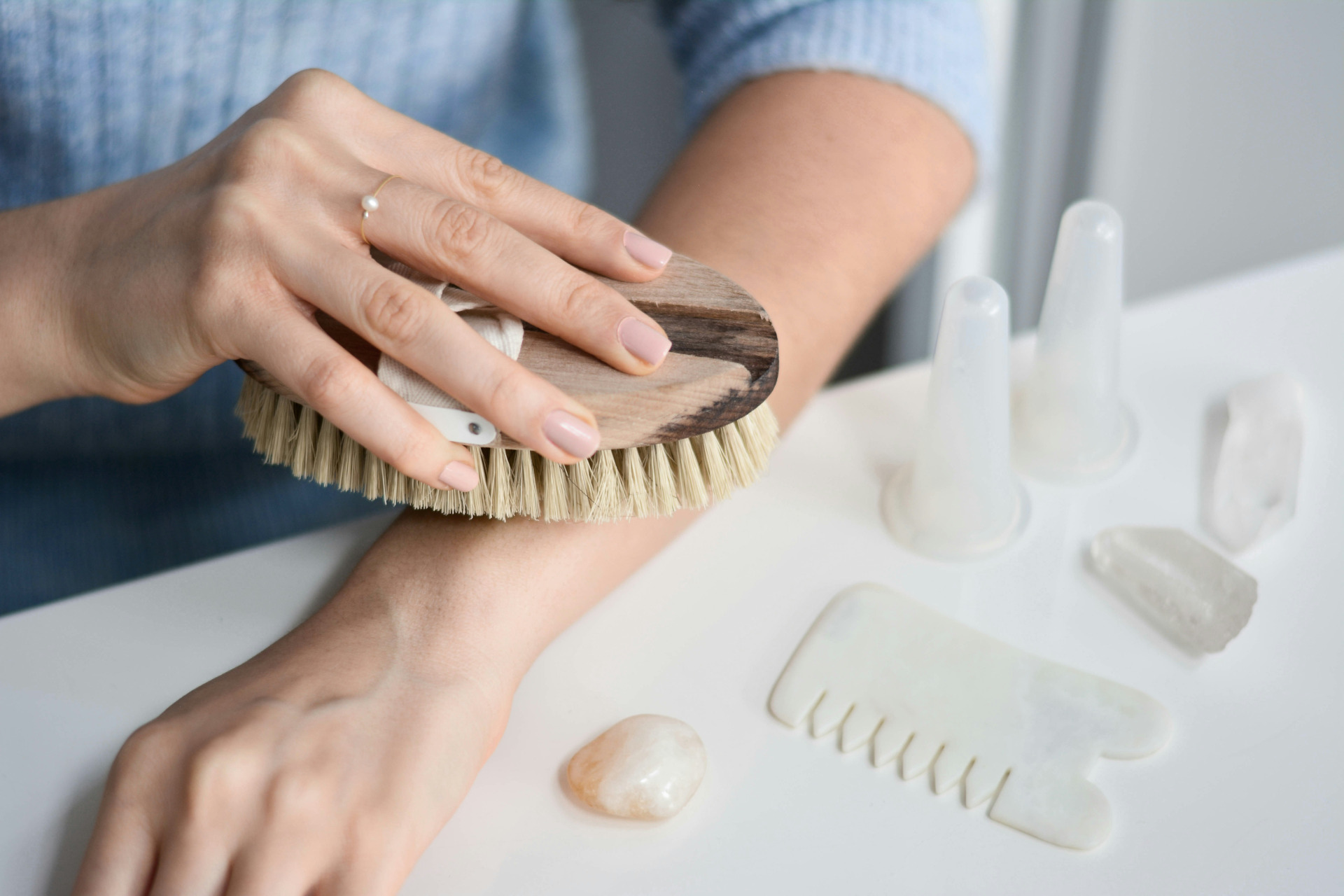
It’s a lot like what it sounds like - you simply use a dry brush to brush your skin, as a form of exfoliation. The practice was known as garshana in Indian ayurvedic medicine more than 3,000 years ago, and was also used in ancient Egypt, Greece and China.
How Dry Brushing Benefits Your Skin
There are several ways dry brushing can improve your skin.
Natural Exfoliation
Dry brushing removes dead skin cells, leading to a softer, more radiant appearance. It encourages the growth of new cells, which helps to even out skin tone and keep your skin looking soft for longer. Unlike chemical exfoliation products, which contain acids, there is no danger of burns. The practice carries little risk if done moderately and sensibly.
Circulation Boost
Much like a facial massage, dry brushing stimulates blood flow to the skin's surface, resulting in a healthy glow and a vibrant complexion.
Lymphatic Flow and Detoxification
This is potentially the most important of the dry brushing benefits. Your lymphatic system is your body’s internal drainage and filtering network, working in tandem with your blood circulation. It’s vital for your health:
As your heart pumps blood to cells to deliver oxygen and nutrients, the lymphatic system collects what’s left behind — excess fluid, dead cells, bacteria and waste products →
This waste fluid, called lymph, moves through tiny vessels just beneath your skin →
It’s transported to lymph nodes in your neck, armpits and groin, where immune cells filter and destroy harmful substances →
This detoxified, cleaned lymph is returned to your bloodstream
Unlike your circulatory system, where the heart acts as a pump, the lymphatic system is passive, relying on muscle contractions, breathing and your physical movement to keep lymph flowing. This is where dry brushing comes in — gentle, rhythmic strokes on the skin manually stimulate the flow, helping to accelerate your body’s natural detoxification process.
And this, in turn, leads to a healthier body and healthier, glowing skin.
Research into dry brushing is very limited. However, a recent study examined kanpumasatsu, a Japanese technique that involves using a dry towel to massage the body — a principle very similar to dry brushing. The study found that levels of salivary secretory immunoglobulin A (sIgA) were increased following the practice. This is a key antibody in the immune system, suggesting a strengthening of the body’s natural defenses.
The research also suggests that it is likely that kanpumasatsu has a similar effect to lymphatic drainage, boosting overall wellness. From this, we can extrapolate that dry brushing may well have similar benefits.
4 Steps to Successful Dry Brushing
Dry brushing is an easy and enjoyable technique once you get used to it. Here’s what you need to know to get started.
1. Choose Your Brush
This is a matter of personal preference and you may have to experiment before you find the ideal brush for your tastes and skin type. In general, look for a long-handled brush that allows you to reach your back, and opt for natural bristles. Dry brushes may have hard, soft, or in-between bristles — start with a medium one and see how you like it.
2. Prepare for Your Session
Both your skin and the brush should be completely dry. The ideal time to dry brush is right before you take a shower, as you will then easily be able to rinse away the dead skin cells. Speaking of which, it’s best to stand in a dry shower or bathtub to avoid a mess, as some skin flaking is expected, especially if you have dry skin.
3. Use the Right Dry Brushing Technique
The key to obtaining maximum dry brushing benefits is to brush toward your heart, or where appropriate, toward the lymph nodes in your armpits. This follows the natural pathway of your lymphatic system.
Start with the soles of your feet, then the tops of your feet and your ankles, always using upward strokes.
Continue up your legs, one leg at a time. Try using long sweeps from ankles to knees and then from knees to thighs and buttocks. Remember to cover the entire leg, front and back.
Brush your stomach next. You can keep using upward strokes or some experts recommend a circular clockwise motion here to mimic the path of your digestive system.
Brush breasts gently upward and outward toward the armpit.
On your back, use long upward strokes.
Finish with your arms and hands, brushing up toward your shoulders.
To brush your face — if you wish to, many people do not — be extremely gentle. Brush your forehead up toward your hairline. Brush your cheeks down toward your chin.
On all parts of the body, pressure should be firm enough to feel stimulating but never painful or sufficient to cause redness. Do not scrub back and forth. A full-body dry brushing session should only take around three to five minutes.
4. Aftercare is Essential
Straight after dry brushing, take a lukewarm shower. Then pat your skin dry and immediately apply a high-quality natural body oil or a hydrating lotion. Your skin will be perfectly prepped to absorb this moisture, leaving it feeling soft and smooth.
Is Dry Brushing Right for Everyone?
Generally, dry brushing is considered safe for most individuals. However, if you have eczema, psoriasis, rosacea or open wounds, you should avoid it. Those with highly sensitive skin may also find it uncomfortable.
If you do give it a go and find that your skin is red or uncomfortable, you are probably brushing too hard. Allow your skin to rest for several days and, if you want to try again, use a softer brush and lighter pressure.
Frequently Asked Questions About Dry Brushing
Dry brushing benefits are easy to see in the glowing skin results, but you may still have questions. Here are some answers to queries people commonly have.
How often should I dry brush?
This depends on your preference and skin sensitivity. Start with once a week. If you tolerate it well, some experts suggest dry brushing two or three times a week. Some people do it daily, but always listen to your skin and stop immediately if you experience irritation.
How long does it take to notice the benefits of dry brushing?
You will likely see immediate improvement after your first dry brushing session, but it can take up to a month to see more significant changes, such as improved skin radiance or reduced cellulite appearance.
Can dry brushing get rid of cellulite?
No — but it can temporarily improve its appearance by plumping the skin and improving circulation. A very small study in 2021 found that of three noninvasive cellulite treatments — dry brushing, exercise and topical cream — dry brushing performed the best, showing a 25.8% improvement in the appearance of cellulite after five weeks.
How do I clean my dry brush?
You should clean the brush after every use. Shake off any debris and wash it in lukewarm water with a few drops of hand wash or gentle soap. Then just let it air dry.
Can I dry brush during pregnancy?
Yes, you can, but talk to your healthcare provider first, especially if you have any underlying conditions or if your pregnancy is high-risk.
The Final Brushstroke — A Ritual for Radiant Skin
Dry brushing can be a powerful and pleasant addition to your wellness routine. For just a few minutes a week and the cost of a brush, you can gain a significant uplift in your skin’s radiance and health. Why not give it a go and feel the glow for yourself?