
Body + Mind is reader-supported. We may earn an affiliate commission when you buy through some of the links on our site.
TL;DR: Learning eight foundational poses can help you feel more confident in your first yoga class. These include cat-cow, mountain, low plank, upward-facing dog, downward-facing dog, crescent lunge, warrior II and corpse pose.
If you’re interested in yoga and are looking to develop your own practice, one of the best things you can do is attend a class. Going in person will allow you to watch other practitioners and provide the opportunity to receive cues, adjustments and feedback in real time.
Before showing up at the studio, consider researching and learning a few foundational poses. Doing so will help you understand more cues and keep up with everyone else during a flow.
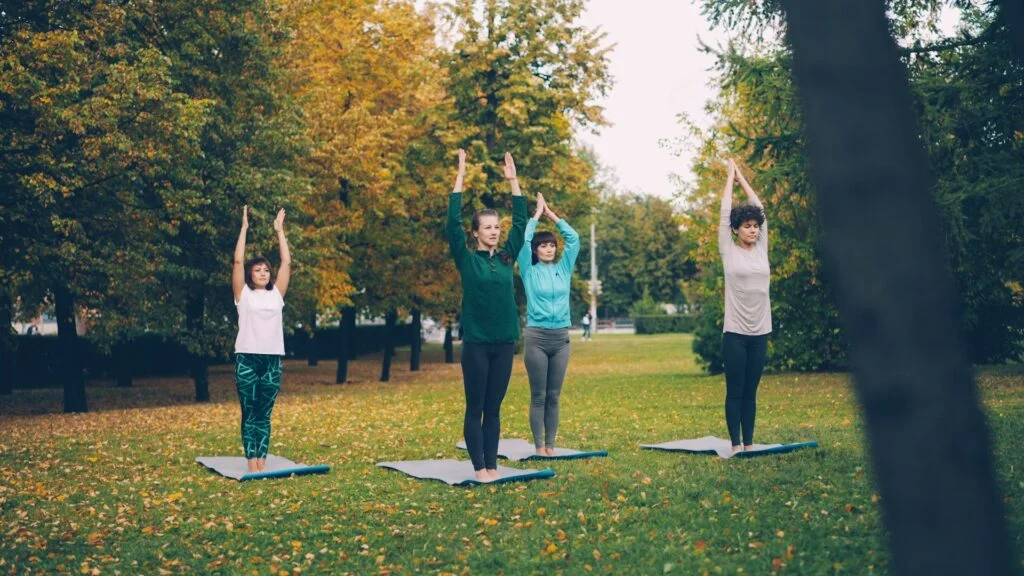
The physical postures and poses in yoga are called asana. Here are eight foundational poses to get familiar with before your first class.
One of the first poses you’re likely to come across in a class is cat-cow or chakravakasana. Often, instructors use this at the beginning of a flow to engage your core muscles, warm up the spine and lubricate your joints. Taking a few cat-cows also allows you to move with your inhales and exhales.
Begin in a tabletop position with a neutral spine. As you inhale, drop your belly, arch your back and let your chest shine forward for cow pose. On your exhale, round the back, tuck your tailbone under and draw your chin to your chest like a Halloween cat.
Mountain pose, or tadasana, is another foundational pose you’ll flow through frequently in a vinyasa class — a type of yoga that connects body movements with breathing. This asana cultivates strength and a sense of grounding.
To practice tadasana, stand at the top of your mat with your feet together and arms by your sides. Palms should face toward the front. Ground down through your feet, lift your kneecaps, tuck your tailbone slightly and pull your shoulder blades down and back. These movements will be subtle, but they’ll create a different sensation than simply standing up.
Although the mountain pose may look simple, it helps promote body awareness and strengthen the connection between your body and mind. Research suggests that this awareness can help reduce stress and improve your overall well-being.
Some teachers call the low plank pose by its Sanskrit name — chaturanga — or the four-limbed staff pose. However, all these names refer to a single asana that looks like a low push-up. This pose is quite challenging, even for seasoned practitioners, so take your time and modify as you build strength to achieve the full expression.
From a high plank, slowly bend your elbows and lower yourself until your arms create a 90-degree angle. Keep tucking those elbows in toward your sides to create one long line of energy from your toes to the crown of your head. Upward-facing dog typically follows this pose.
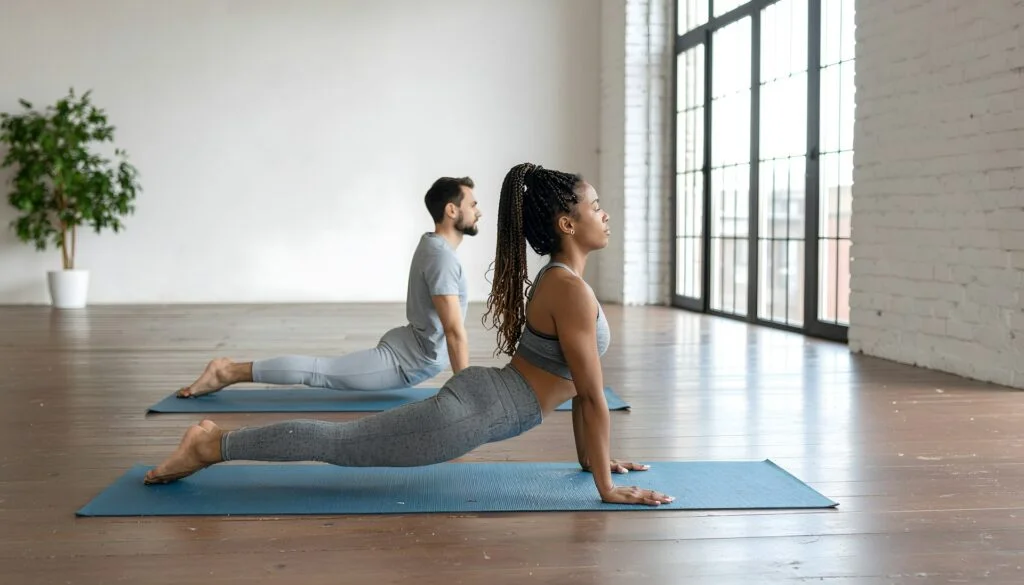
Upward-facing dog may not look like much, but it’s an incredibly dynamic pose that strengthens and stretches multiple parts of the body at once. As you lift your thighs, your leg, butt and lower back muscles engage. Plus, your arms and back get an excellent workout as you press down through your palms and pull your chest forward. Also known as urdhva mukha svanasana, this asana also lengthens and stretches the spine.
From your chaturanga position, flip your feet so the tops of them press into the mat. Allow your hips to sink down and simultaneously press into the palms. Straighten your arms and pull your shoulder blades down your back as you tilt your head upward and open your chest.
After the upward-facing dog, you’ll likely transition to the downward-facing dog. This asana effectively improves bone density, lengthens the hamstrings, and strengthens and stretches nearly all your muscles. Many instructors also use the down dog to reestablish breath or as a resting pose between vinyasas.
After inhaling in upward-facing dog, use your exhale to engage your core and lift your hips up and back. Roll over your toes and press through your palms to lengthen the spine. Focus on shining your elbow creases toward the top of your mat. Additionally, work to sink your heels and tuck your lower belly in.
You’ll likely flow through or hold the crescent lunge during a vinyasa set. You may hear your instructor call this pose ashta chandrasana. It can help improve balance, strengthen the legs and increase hip mobility.
From the back of your mat, step your right foot forward, deeply bending the right knee. Slide your left toes back and keep the heel lifted and the leg straight until the right thigh is parallel to the mat. Square your hips toward the front, raise your arms overhead, and lift through your ribs and chest so your spine is extended.
Sometimes called virabhadrasana II, Warrior II is another common vinyasa pose. This asana is powerful, strong and grounded. Holding this pose for even a few seconds will strengthen the legs and arms, improve focus and remind you where your center is.
Enter warrior II by stepping forward with your right leg and bending through the knee just like in crescent. Turn the left toes out and sink down until your right thigh is parallel to the floor. Open up to the long edge of the mat, raising your arms to a T. Draw the shoulder blades together and gaze out past your right fingertips.
After a sweaty, hot flow, you’ll come into corpse pose, which is a final resting pose. Your instructor may call this pose by its original name — savasana.
For this asana, you’ll lie flat on your back, close your eyes and completely relax. It really is as simple as that. Spend a few minutes in savasana to allow your prana — or energy — to flow through every part of your body. After practicing this pose, you might find yourself feeling more balanced and rejuvenated.
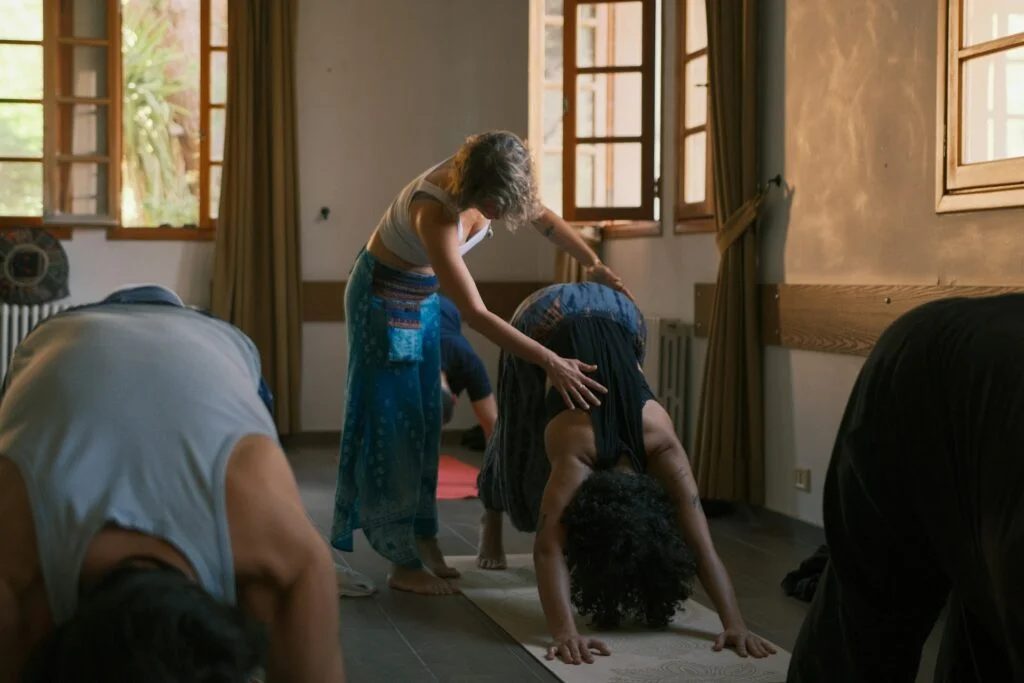
It’s completely normal to feel nervous before your first yoga class. Here are a few things you can do to prepare yourself:
While practicing asana is beneficial to the physical body, it’s important to remember that yoga is more than just poses. It’s a spiritual and mental exercise that can transform your life — and the lives of those around you. Poses may be a way in, but they certainly aren’t the end goal.
As a new yogi, being curious is the first step to help you discover what your body and mind truly need.
You can learn yoga at home using online videos and apps. However, starting with in-person classes is usually better for beginners, so you can learn proper alignment, receive adjustments and avoid injury.
Flexibility is the main benefit of yoga, as the poses help release tight muscles and enhance your range of motion. Additionally, yoga may help you feel more emotionally balanced.
Two to three sessions per week is best for most beginners. This schedule is more manageable than a daily yoga practice and gives your body time to adjust to new postures.
Originally published November 19, 2020. Updated March 12, 2026.
Your email address will only be used to send you our newsletter, and at any time you may unsubscribe. For more information, see our Privacy Policy.
