
Body + Mind is reader-supported. We may earn an affiliate commission when you buy through some of the links on our site.
Beetroot juice as pre-workout may seem like a strange way to pump up your energy before a workout, but it’s surprisingly effective. Diets rich in vegetables are already an overall win. Beets, specifically, can impact your body’s functions during exercise. Let’s take a look at why beet juice could replace your powdered pre-workout drink.
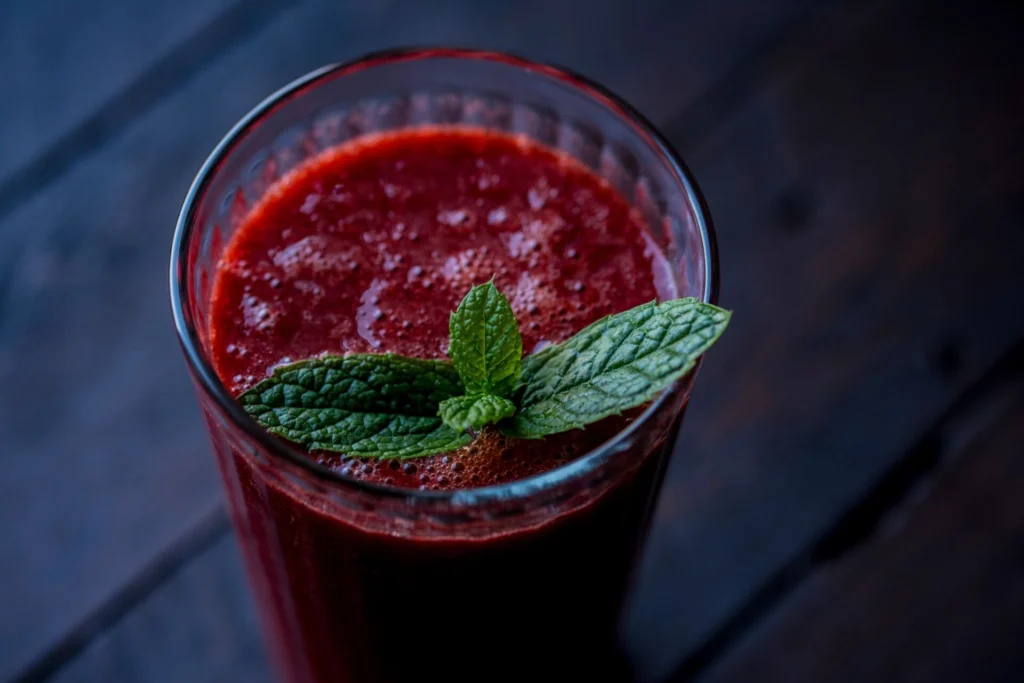
Beets are yummy in borscht, but they’re also a valuable ergogenic supplement. An ergogenic supplement improves physical performance and speeds up recovery. You’ve likely heard of other products in this class, like creatine, caffeine and beta-alanine.
The beetroot is high in folate, manganese, potassium, iron and vitamin C. It’s a nutrient powerhouse, but what sets beets apart as a workout supplement is their high level of inorganic nitrates, which your body can convert into nitric oxide. Nitric oxide signals the muscle cells around your arteries to relax. As a result, your blood vessels dilate, and your blood pressure decreases.
This reduces the amount of oxygen you use in a workout. This may help lower blood pressure by supporting blood vessel relaxation.
There are years’ worth of studies that back up nitrate ingestion and its benefits regarding exercising. When beetroot is consumed whole, it greatly improves running performance. One study found that during the last 1.8 kilometers of a five-kilometer run, athletes who ingested beet juice were 5% faster than those who didn’t. At 1.8 kilometers into the five-kilometer run, those who drank beet juice reported having lower perceived exertion.
Trained cyclists also saw improvements in another study. In a double-blind study in which one group drank regular beet juice and the other drank nitrate-depleted beet juice, the group that drank regular beet juice improved their time-trial performance and power output.
Another study found that dietary nitrate supplementation reduces blood pressure, reduces oxygen cost, and, in some cases, enhances exercise performance and tolerance.
The science is on the side of beet juice when it comes to supporting oxygen efficiency, endurance and speed.
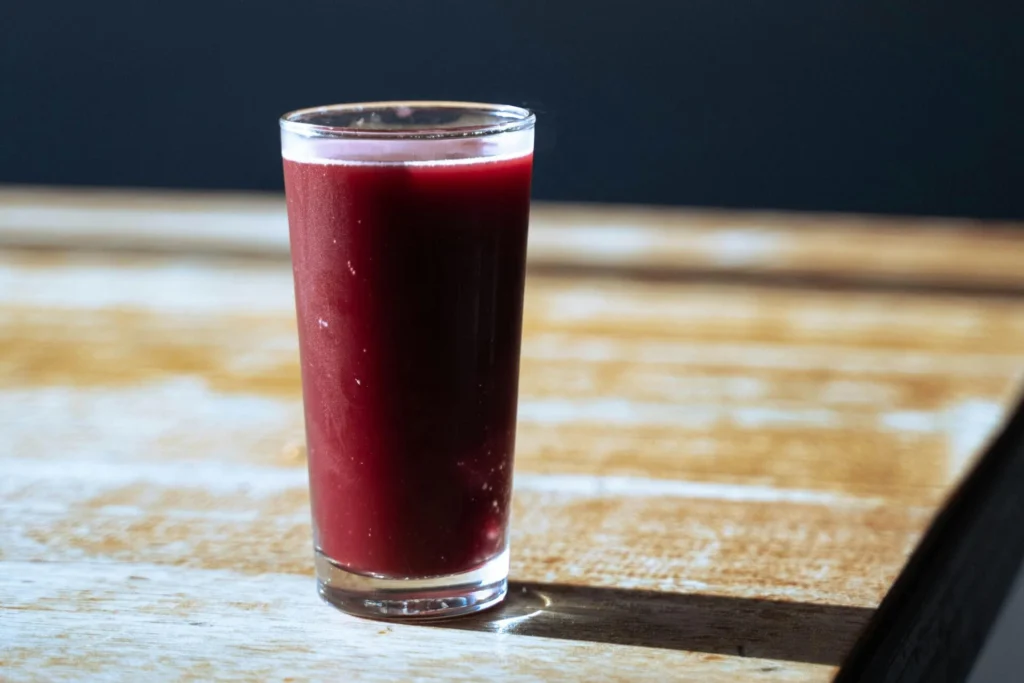
While not directly tied to workout performance, being overall healthier will make you a better athlete. When you drink beet juice, you also get to experience these positives:
There’s mixed evidence on whether beet juice can improve the performance of athletes in high altitudes. A study of well-trained runners in a simulated altitude environment showed no difference in performance. With that said, it was a small study, so more observation is needed.
Unlike other pre-workout supplements, beet juice isn’t about when you drink it, but for how long. The studies throughout this article typically test athletes’ performance days after they’ve consistently drunk beet juice, like in the cyclist double blind study. This suggests that beet juice may take longer to take effect, but if you’re consistent, it could continue to work.
Again, this is speculation, but from the studies, you’ll start seeing the effects after drinking beet juice for several days in a row. Combining caffeine and beet juice may increase the effects of beet juice, so drinking it with your morning coffee could improve your workout performance.
The dosage of beet juice is more documented. A systematic review of beet juice supplementation on cardiorespiratory endurance athletes found that nitrate doses ranging from 515 to 1,017 milligrams are recommended for improving physical performance.
Remember that eating beets also counts. If you have a side of roasted beets, a beet salad, or dunk some pita chips in beet hummus, that means you can drink less juice.
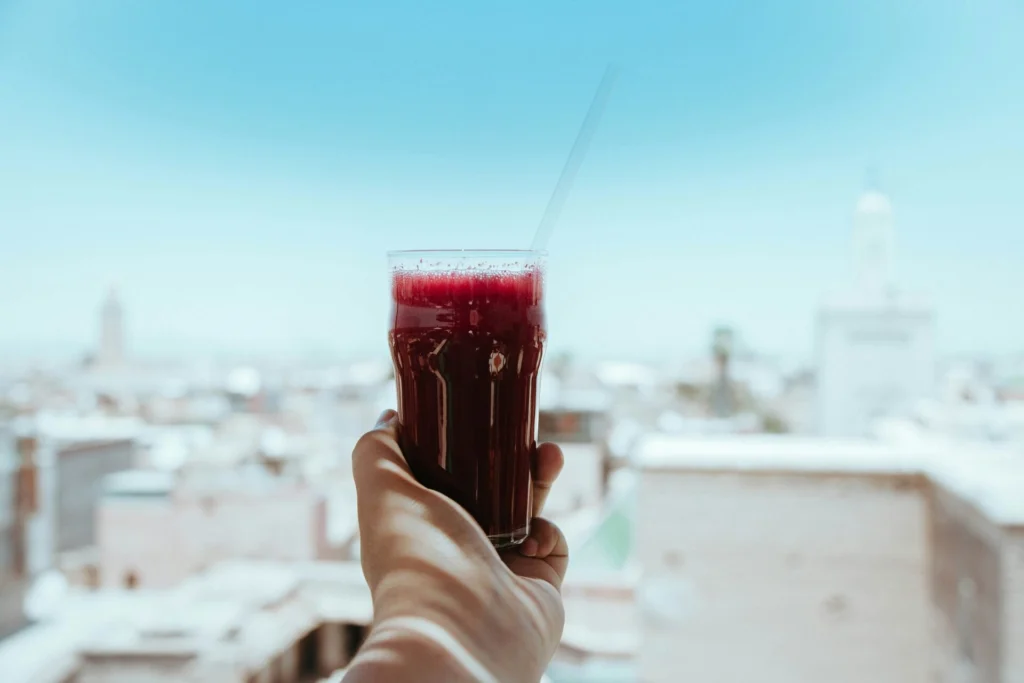
Maybe beet juice is good for you, but to many, beets can taste too earthy. It’s hard to benefit from the anti-inflammatory properties of beets when you’re gagging trying to keep them down.
The first thing to focus on is the preparation. Always peel the beets before blending, because the earthy taste is mostly in the skin. Then, use raw beets. When you cook them, they lose a bit of their flavor. Uncooked, beets are crisp and cleaner.
Once your beets are prepared, consider adding these mix-ins:
If you still dislike drinking it straight, you can freeze the juice into ice cubes and drop them into fruit smoothies, or use the juice in savory salad dressings and glazes. Another option is to add more beets to your diet. For example, you can add some juice to your morning yogurt.
Packed full of vitamins and minerals, beet juice can be a tasty addition to your workout routine when done right. Not only could it improve your overall endurance and speed during a run, but it also adds more vitamins, minerals and plant compounds to your routine. Try incorporating more beets into your diet today, either in liquid form, in salads or as a side dish.

Your email address will only be used to send you our newsletter, and at any time you may unsubscribe. For more information, see our Privacy Policy.
