

Body + Mind is reader-supported. We may earn an affiliate commission when you buy through some of the links on our site.
Being absolutely in love with your partner doesn’t exempt you from fighting. You can actually experience everything from small misunderstandings to relationship-ending arguments, even if you believe you’re in a healthy relationship. If you know that you’re in the wrong, it’s important to learn how to apologize genuinely to them.
Saying sorry can be the difference between greeting another day with the love of your life and ending things with them for good. And while every situation is different, here are the fundamentals of giving a genuine apology.
As kind as it may be to say sorry to your partner, you need to understand what you’re apologizing for first. By recognizing what you did wrong to them, you can start to process how the situation got to where it is now and why your approach may have hurt them.
There are many possible causes of the squabble. In 2026, 36% of American couples argue about tone of voice or attitude. Others would also cite communication style or financial problems as points of contention. That said, each argument is unique and you need to dig deep.
Now that you know what you’re apologizing for, be clear about why you’re apologizing. Many people see an apology as a way to make peace with their partner or to find their own personal peace of mind. And while that may occur after apologizing, it would be more disingenuous.
When you’re apologizing to someone, it shouldn’t be with the hopes that they’ll get over it and brush off the issue. You need to be genuinely remorseful that you’ve hurt the one you love with your words, actions or lack thereof.
If expressing your regrets and concern toward your partner isn’t the center of why you’re apologizing, you might have to revisit step one again. Think long and hard about what had occurred.
It’s time to finally say sorry to your partner. State the situation that you know caused it and highlight the mistake that you made. Tell them that you recognize how it affected them and that you genuinely apologize for what happened.
Some people find themselves explaining their side of the story to justify what they said or did. However, it’s better to wait for your partner to ask you themselves. Jumping into your own reasoning can seem like you’re making excuses and not actually rueful.
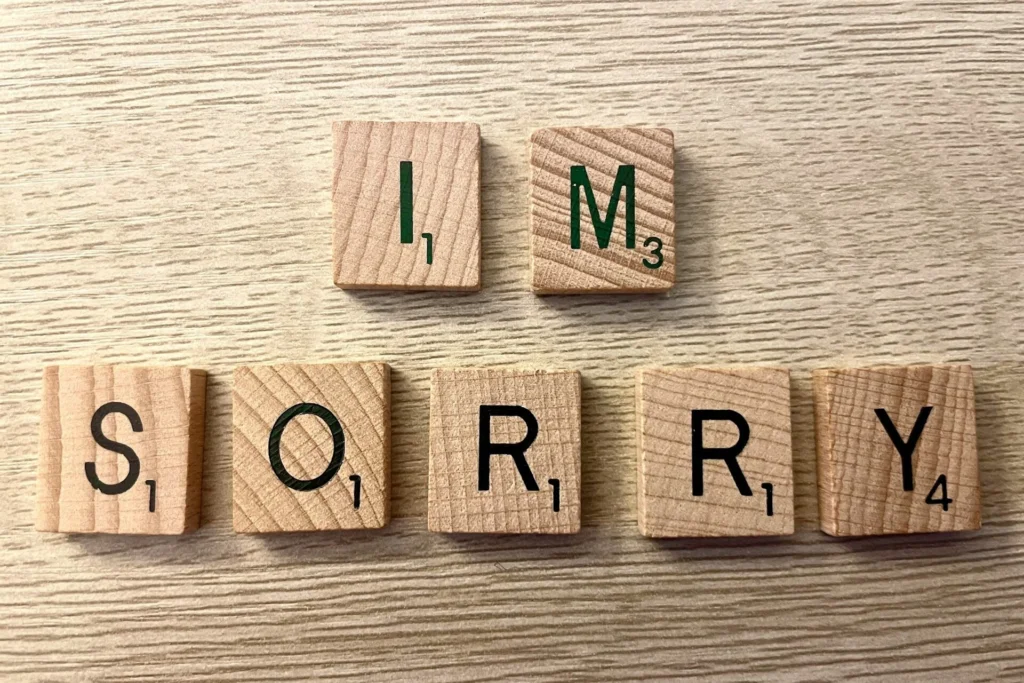
It’s best to apologize in person, as saying your thoughts in real time feels less rehearsed and more genuine. However, it’s important to be careful about your language and tone. It’s easy to get swept away when you’re carried by your emotions. Don’t be afraid to take pauses and to be up front with how nervous you may feel about choosing the right words.
Saying sorry is more about the person you’re apologizing to than yourself. People who refuse to say sorry are a red flag, but so are those who try to play victim and downgrade themself for the sake of pity.
That kind of approach can come off as manipulative. You can’t just constantly and repeatedly say how ashamed you are under the premise that you will be forgiven right away.
Learning how to apologize should also include giving your partner time to take it in. And honestly, every person is different—some may take only a few minutes to process your apology, while others may take days to think about it.
It’s natural to feel anxious about this limbo that you and your partner are going through. However, it’s important to realize that they’ve been hurt. An apology can kick-start the healing process, but it’s not exactly a quick fix.
You can ask them about when you can revisit the conversation, but that’s only in a good headspace. Otherwise, just try to give them as much space as they need until they’re ready to talk again.

It’s important to recognize cues that your partner is ready to talk again, especially if they’re not very confrontational about how to pick up where you both left off. Holding hands, tugging at your clothes or just calling you into the room are good signs that they may feel ready again.
When your partner speaks, actively listen to what they have to say. If they have questions, fill in the blanks with your clarifications. Remember to be honest during this part of the conversation to better understand one another.
Don’t be afraid to apologize again if needed. Sometimes, you need to let your pride down multiple times to showcase just how remorseful you are of what occurred.
After showing how remorseful you are, it’s time to display how much you value your partner. Try to find your areas of improvement to make amends. Again, the exact words or actions can differ depending on the situation and your fight. That said, here are some examples and their suitable scenarios.
If the argument was based on miscommunication, the only way to remedy it is to practice better communication. Listening to your partner can go a long way. That said, you should also express what’s on your mind in real time. That way, you two can always be on the same page.
If you and your partner fought over an item you took or gave away, consider giving a gift as a peace offering. Remember to be clear that it’s not a full replacement for their belongings, especially if they have sentimental value. State that it isn’t a bribe either. Be clear that you just wanted to give them a gift because you want to make them feel better after wronging them.
Some couples fight because they feel like they distrust one another. Try to explore ways of being more open and transparent. Providing little updates throughout your day is a good start. You can also provide phone access if you wish. In 2023, 83% of Americans have told their partners their phone passcode.
Mastering how to apologize can be a learning process for some people, especially in bigger fights. However, it’s critical to be genuine and communicative if you want to fix the relationship with your partner. You and your partner will be all the healthier toward one another in the long run.

Your email address will only be used to send you our newsletter, and at any time you may unsubscribe. For more information, see our Privacy Policy.
