
Body + Mind is reader-supported. We may earn an affiliate commission when you buy through some of the links on our site.
If you’ve ever wondered whether you can get pregnant right after your period ends, you’re definitely not alone and the answer is more nuanced than a simple yes or no. Knowing when your ovulation period occurs and how to identify your fertile days after your period can be a game-changer, whether you’re trying to conceive or just want a better understanding of your own body. Here’s a no-fluff breakdown of how your cycle actually works and how to work with it instead of guessing.
Before diving into fertile windows and timing, it helps to understand the four phases your body goes through each month. Think of your menstrual cycle as a built-in fertility calendar that rests automatically.
The cycle kicks off with menstruation, which is day one, the first day you bleed. From there, you move into the follicular phase, when your body begins developing a mature egg and estrogen levels start to rise. Around day 14 of a 28-day cycle, a sudden surge in luteinizing hormone causes the ovary to release a mature egg. This is ovulation.
After that, the luteal phase takes over, during which your body prepares the uterine lining for a possible pregnancy. If the egg isn’t fertilized, hormone levels drop, the lining sheds and the whole process starts over.
A typical menstrual cycle is 28 days, but cycles ranging from 21 to 35 days are considered normal. There’s plenty of variation from person to person and even month to month, which is exactly why understanding your individual cycle matters so much.
You’ve probably heard that ovulation happens on day 14, but that’s really just an average based on a textbook 28-day cycle. In reality, your ovulation period can shift quite a bit depending on your personal cycle length.
If your cycle is shorter, around 21 to 25 days, ovulation can happen earlier, closer to day 11. If it’s longer, around 30 to 35 days, it may be closer to day 20. People with cycles between 26 and 32 days will be most fertile between days eight and 19 of their cycle.
Variations in the menstrual cycle usually occur in the follicular phase, which happens before ovulation, while the luteal phase, from ovulation to the next period, is typically 14 days long. That means if your cycle tends to be longer or shorter, the difference almost always shows up in the first half, not the second. Ovulation works backward from your next expected period rather than forward from your last one.
Your fertile window is wider than most people think. You don’t need to perfectly time things to a single day. There are about six days during each menstrual cycle when pregnancy is possible, known as the fertile window.
Why six days if the egg is only released once? It comes down to sperm survival. Pregnancy is technically only possible during the five days before ovulation or on the day of ovulation itself. Still, the most fertile days are the three days leading up to and including ovulation. Once the egg is in the fallopian tubes, it lives for around 24 hours before it can no longer be fertilized, ending the fertile window.
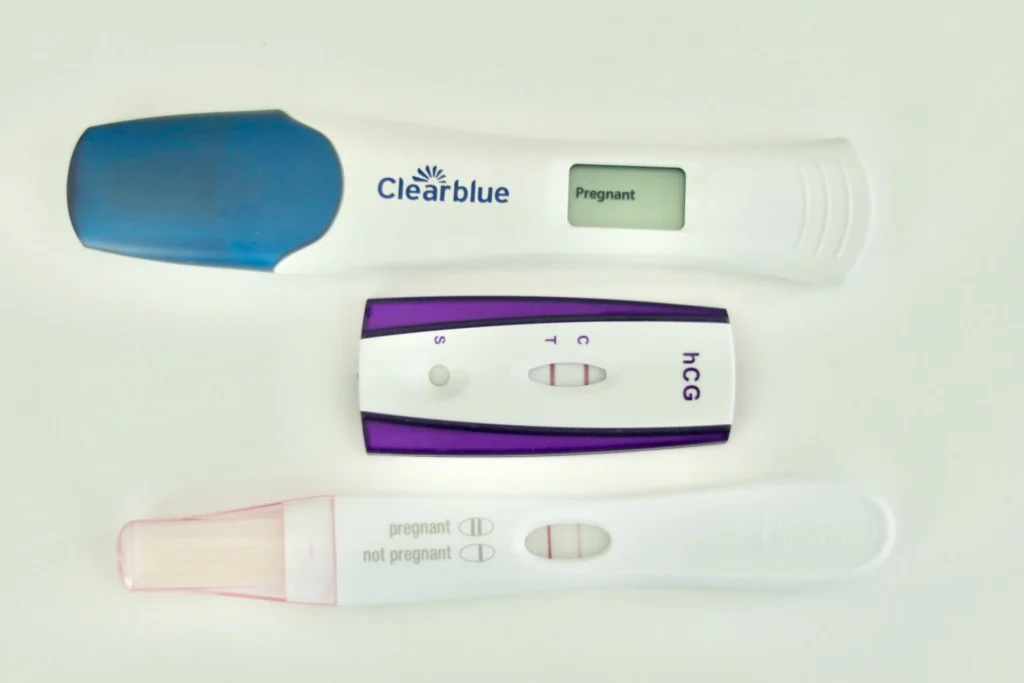
The short answer is yes. It is possible and it’s more common than people expect. The idea that you’re completely safe from pregnancy in the days right after your period is one of the most persistent myths in reproductive health and it catches a lot of people off guard.
If your period lasts five to seven days and you have a shorter cycle of around 21 to 24 days, you could be approaching your fertile window almost immediately after bleeding stops. Since sperm can survive in the reproductive tract for up to five days, having sex near the end of your period could technically result in pregnancy if ovulation happens shortly after.
The likelihood of conception rises from day eight, reaching its maximum on day 13 and decreasing to zero by day 30. That said, every person’s body is different and irregular cycles can push ovulation even earlier or later than expected. If you’re not trying to conceive, don’t rely on timing alone as contraception. If you are trying to conceive, tracking your cycle carefully gives you a much clearer picture.
Your body doesn’t stay silent leading up to ovulation. Once you know what to look for, the signals are actually pretty readable. Here are the most common ones:
Knowing the signs is one thing. Actually tracking them consistently is another. Here are a few methods that work well, especially when combined:
Your follicular phase is also a smart time to focus on nutrition. Many people naturally eat less during the first half of their cycle, making nutrient-dense choices especially important heading into ovulation.
Understanding your ovulation period and your fertile days after your period isn’t just useful for family planning. It’s a form of body literacy that pays off in many ways. The more familiar you are with your cycle’s rhythms, the better equipped you are to notice when something’s off, advocate for yourself with healthcare providers and feel genuinely at home in your own body. Whether you’re trying to conceive, trying not to or are just plain curious, tracking your cycle is one the simplest, most empowering things you can for your health.

Your email address will only be used to send you our newsletter, and at any time you may unsubscribe. For more information, see our Privacy Policy.
