

Body + Mind is reader-supported. We may earn an affiliate commission when you buy through some of the links on our site.
Your scalp is easy to ignore until it suddenly refuses to be ignored, plaguing you with an intense and persistent itching. Even worse, the itch can creep in during meetings, workouts or right as you’re trying to fall asleep. You know scratching will only make things worse, but resisting isn’t exactly easy. If you want to stop the itch for good, you need to understand what’s triggering it. Here are 10 reasons why your scalp is so itchy, and what you can do about it.
If your itchy scalp comes with white flakes on your hair or shoulders, dandruff is likely the culprit. Despite what many people think, dandruff is not caused by dry skin. It’s actually a mild form of seborrheic dermatitis, an inflammatory condition that affects oily areas, such as the scalp. The inflammation leads to itchiness and visible flakes, which can feel uncomfortable and embarrassing. Although there’s a stigma surrounding dandruff, it’s a widespread condition with nearly 50% of people globally experiencing it.
Dandruff is usually manageable. You can use over-the-counter dandruff shampoo to help calm the itch and reduce flakes. Look for formulas that contain zinc pyrithione, ketoconazole or salicylic acid that help target the underlying causes. If your symptoms don’t improve, your doctor may recommend prescription-strength shampoos, antifungal treatments or topical corticosteroids — an anti-inflammatory medication — for your scalp.
Psoriasis is an autoimmune disease where your body produces skin cells too quickly. These extra cells build up and form thick patches with dark brown patches on darker skin tones, or silvery-white scales on lighter skin tones. Around 50% of people with psoriasis develop patches on their scalp, which can make it intensely itchy, tight and dry.
That itch can make you want to scratch or pick the scales, but it’s important not to. To relieve the itch, gently rub the area with the soft pads of your fingers. You also need to be extra gentle when shampooing and try to avoid blow-drying or other heated tools that can further dry the scalp. If your itch won’t go away, it’s best to see a doctor. They can prescribe treatments like corticosteroids and medicated shampoos to reduce swelling, redness and scaling.
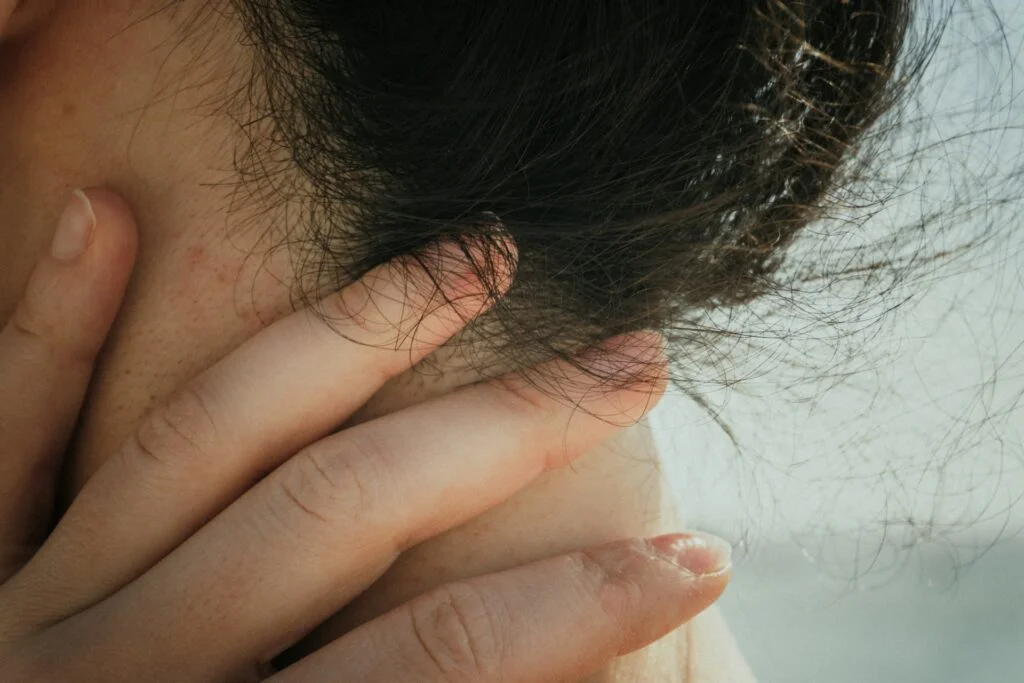
Head lice are tiny insects about the size of sesame seeds that survive by feeding on human blood. Unfortunately, that feeding can be extremely itchy. Although head lice are most common in children aged three to 11, adults can get them too. Keep in mind that lice have nothing to do with poor hygiene. They spread easily through direct head-to-head contact or by sharing personal items like brushes and hats.
The most important thing to do is to treat head lice as soon as you notice them. Many drugstores and grocery stores have treatments that kill lice and their nits, including shampoos containing pyrethrin or permethrin. If you live with others, checking and treating everyone in your household can help stop reinfestation.
Sometimes the answer to why your scalp is so itchy is sitting right in your shower. If your scalp reacts to a product you’re using, you can develop contact dermatitis. One of the most common triggers is para-phenylenediamine, a chemical widely used in dark hair dyes and henna. Even if you’ve colored your hair for years, it’s still possible to suddenly develop an allergic reaction. Fragrance can be responsible, too, and it shows up in many everyday products like shampoos and conditioners.
The only real fix is to stop using the product that’s causing the reaction. If you’re unsure which one it is, keeping a symptom journal may help you spot patterns. A dermatologist can also help you identify which ingredients or products you may need to avoid going forward.
When you don’t rinse out shampoo, conditioner, hair masks or other products properly, residue can stay on your scalp. This buildup can irritate the skin, leaving it dry, itchy and uncomfortable. Many styling products contain allergens or irritants, and the longer they sit on your scalp, the more likely they are to cause problems.
To address product buildup, start by rinsing thoroughly each time you wash your hair. It also helps to streamline your routine, cut back on heavy styling products and pay attention to those with silicones. Moreover, adding a clarifying shampoo to your routine once a week can help melt away buildup and give your scalp a much-needed rest.
Dry scalp can be the reason why your scalp is so itchy. It happens when the outermost layer of your skin lacks moisture, causing your scalp to feel tight, flaky and itchy. The condition is prevalent in cold or dry climates and during winter. In some instances, the itch may feel worse at night due to transepidermal water loss, where water evaporates from the skin and causes it to be drier. Plus, your corticosteroid levels naturally drop overnight, which can make itching feel more intense.
Heat doesn’t help either. Hot showers and heated styling tools can further dry out your scalp. That’s why you need to turn down the temperature or avoid heat altogether. You should focus on hydrating conditioners and masks with ingredients like aloe vera and hyaluronic acid. It’s also a good idea to apply oils such as coconut, argan, peppermint, or tea tree to help replenish lost moisture.
If your scalp develops a red, itchy rash that appears just as quickly as it disappears, hives may be the reason. These itchy welts can be triggered by many things, including food, medications, stress, allergens or even sweat. Because they tend to come and go, they can be confusing and frustrating to deal with. To make matters worse, the itch is usually sudden and intense.
You can take an oral antihistamine to help calm the reaction and ease the itch. Observing potential triggers can also help you avoid future flare-ups and be more in control of your scalp health.

Another skin condition that can leave your scalp red and itchy to the point of discomfort is atopic dermatitis. It’s a common inflammatory skin disease that affects around 10% to 30% of children and 2% to 10% of adults. Since the itch is typically constant and distracting, the condition can interfere with daily life.
While there’s no way to prevent atopic dermatitis, you can manage it by adopting gentler routines. Avoid scrubbing your scalp aggressively, even when it itches, and don’t wash your hair every day. If your symptoms persist, a dermatologist may prescribe medication to help calm inflammation and reduce itching.
Acne is so common that it affects up to 50 million people in the U.S. every year, and it doesn’t stop at your face. It can also appear on your scalp, where sweat and hair products can clog pores in much the same way. Sweat acne can feel both painful and itchy, particularly when you’re brushing or washing your hair.
Simple habit changes are usually enough to prevent this issue, such as washing your hair more frequently and avoiding tight hats or headbands. Additionally, switch your hair products if your current ones are heavy or pore-clogging.
Hearing the phrase scalp ringworm may cause your hair to raise, but it’s simply a fungal infection of the skin that’s highly treatable. Also known as tinea capitis, it reaches deep into the hair follicle and can cause round patches of hair loss that slowly get bigger.
It’s essential to see a doctor as soon as you suspect it, as the condition requires prescription oral medications for up to two months. The fungi thrive in warm, damp environments, like a sweaty scalp, so try washing your hair more often to help reduce discomfort.
An itchy scalp is annoying and distracting, but it’s rarely something you have to live with. Once you know why your scalp is so itchy, you should be able to find the right solution. And when in doubt, always get it checked.
Your email address will only be used to send you our newsletter, and at any time you may unsubscribe. For more information, see our Privacy Policy.
