

Body + Mind is reader-supported. We may earn an affiliate commission when you buy through some of the links on our site.
Struggling to get comfortable at night because of period cramps can make falling asleep feel impossible. Whether you’re shifting your pillows or trying to find that sweet spot, finding relief is often a challenge. The position you sleep in actually plays a big role in how much relief you feel and how much rest you get. Discover practical, research-backed sleeping positions and explore tips to help ease cramps and make your nights more restful.
Menstrual cramps most often cause pain in the lower abdomen, back and even thighs. These areas can feel especially sensitive when you’re trying to get comfortable at bedtime. That’s why your sleeping position matters more than you might think.
By paying attention to how you position yourself and experimenting with different setups, you might discover just how much your sleeping posture can affect period pain. Sometimes, a simple shift is all it takes to find a little nighttime relief and wake up feeling more rested.
Choosing the right sleeping position during your period could be a game-changer for how comfortable you feel overnight. While everyone’s body is different, trying out a few supportive sleep setups can help you discover what provides you with the most relief and the best chance of a peaceful night’s sleep.
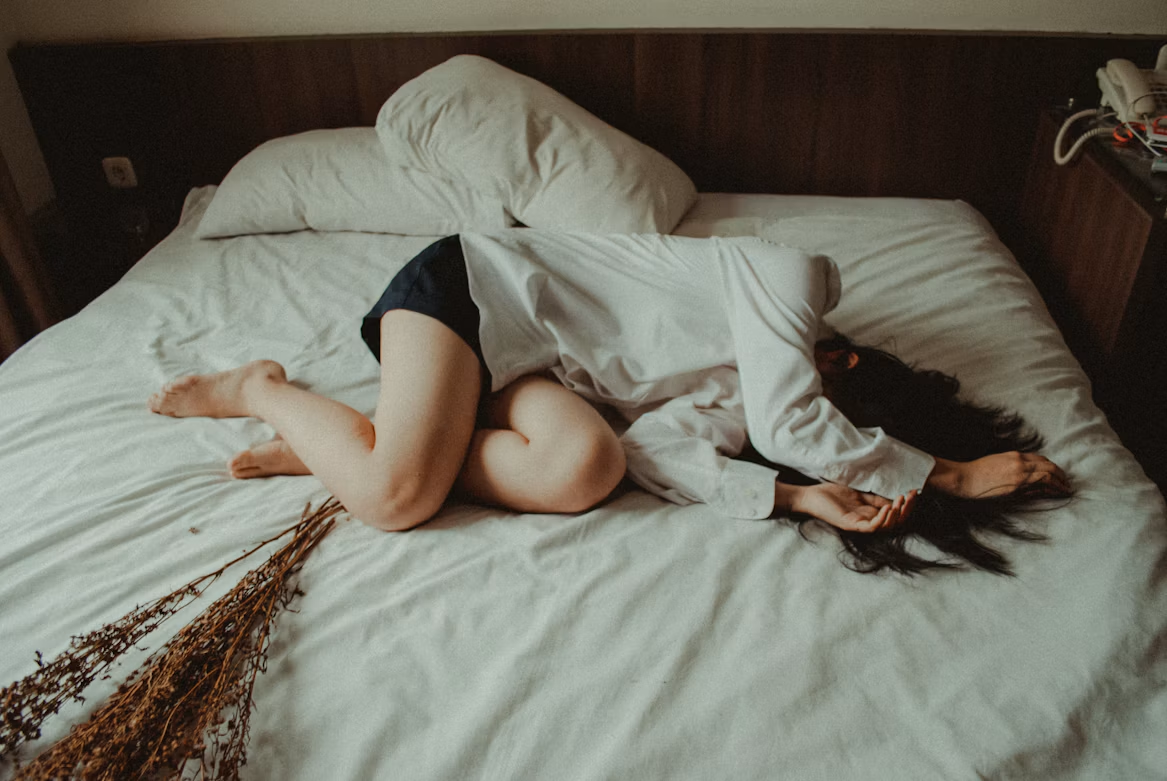
Tucking your body into a gentle curl on your side or in the fetal position can be especially comforting when cramps make it difficult to fall asleep. Hugging your knees up close to your chest can help relax your core muscles and ease tension in your lower back and abdomen. This position can also feel soothing emotionally, helping the mind and body unwind together. If this setup feels cozy for you, it’s a simple way to ease discomfort and invite sleep.
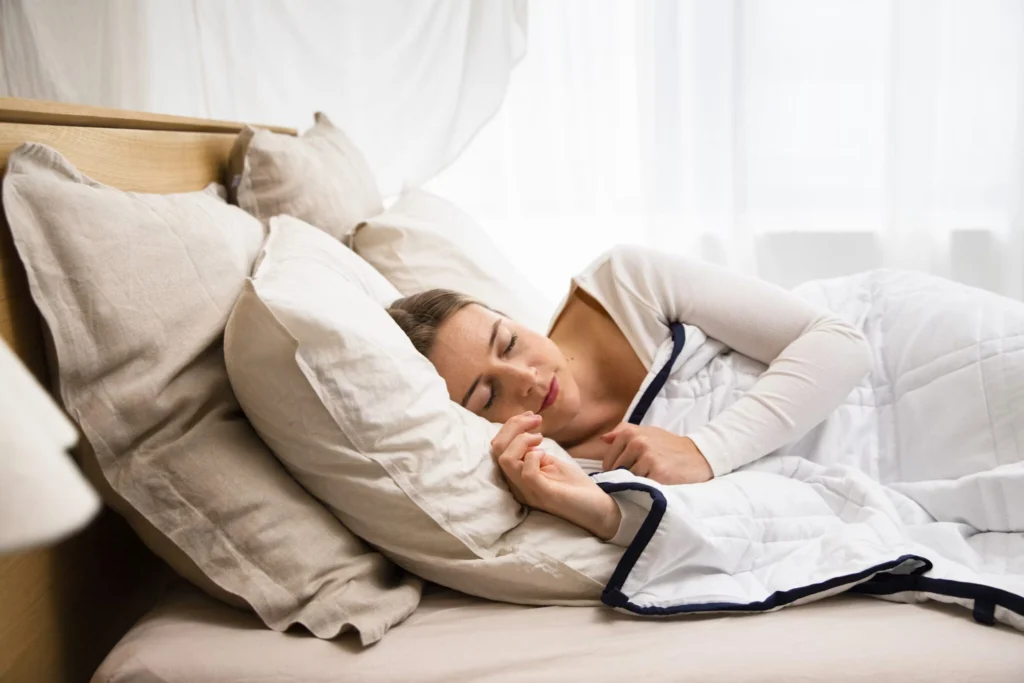
A pillow placed between your knees is an easy adjustment that can make a real difference in your comfort. This technique helps align your hips and spine while you’re lying on your side. It may reduce pressure on your lower back and make cramps less severe. It’s also a great option if you have discomfort in your hips or knees.
Using a waterproof pillow cover or an old pillowcase can give you peace of mind during heavier flows, so you don’t have to worry about leaks as you drift off.
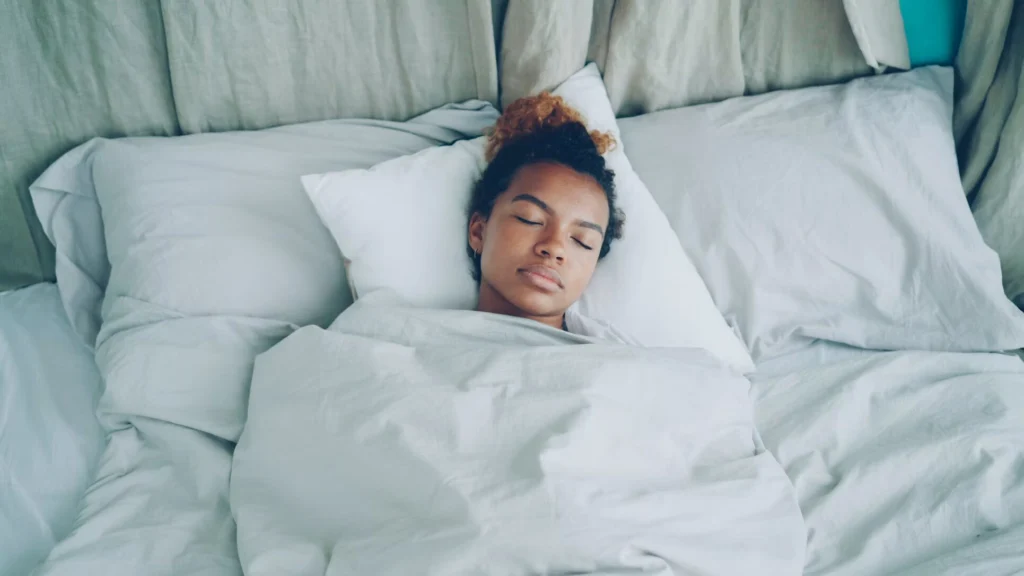
Sleeping on your backside may offer menstrual pain relief, especially if you suffer from a retroverted uterus, a condition in which your uterus tilts backward, not forward toward your abdominal wall. You can also experiment with placing a soft pillow or rolled towel behind your knees or along the small of your back to reduce tension and keep your spine comfortable. Many people appreciate being able to place a hot water bottle on their belly in this position for extra soothing warmth during the night.
However, sleeping on your back doesn’t work for everyone. You may also find that lying flat increases pressure on your lower back if you don’t use enough pillows for support. If this position doesn’t help or causes new discomfort, feel free to try a different one that supports your rest and well-being.
Most professionals recommend against sleeping on your stomach, as turning your head to the side can strain your back and neck. Still, there are nights when this is the only position that feels remotely comfortable. If you do sleep on your stomach, try using a slim pillow or no pillow at all to keep your neck in a natural alignment and avoid extra tension.
If you have breathing issues, such as sleep apnea, it’s a good idea to check with your doctor before choosing this position. Don’t forget to double up on period protection, since stomach sleeping can sometimes lead to leaks.
On especially tough nights, sitting up might be surprisingly helpful. Resting in a supportive chair or on your bed with extra pillows can take pressure off your abdomen and make it easier to use heat therapy, such as a hot water bottle or a microwavable pack. Try leaning back at a gentle angle. Too upright might be uncomfortable, but a slight recline can feel restful.
Sitting up to sleep isn’t always suitable for everyone. It may not provide enough support for your lower back over long periods, and some people might find it hard to get quality rest this way. If you have any concerns about circulation, back pain, or specific health conditions, it’s always best to check with a healthcare professional to ensure this option is safe and comfortable for you.

Sleeping in a hammock can create a gentle, cradling effect that may feel very comforting. Hammocks naturally elevate your head slightly above your body, which can help soothe you during your period. The subtle rocking motion can also relax your muscles and help you drift off faster.
If you have a balcony or safe outdoor space, spending the night in a hammock under the stars can be a uniquely soothing experience, weather permitting.
Finding the right position is just one part of getting more comfortable during your period. Here are a few extra tips you can try before bed or while you’re winding down for the night:
Here are answers to commonly asked questions about sleeping with period cramps.
Your body slows down and relaxes as you prep for sleep, which sometimes means you notice pain more intensely. A study also found that poor sleep quality was the most important risk factor for more severe menstrual pain in adolescent girls. Going to bed later, getting up late, and sleeping fewer than five hours were all associated with higher pain scores and more severe symptoms.
Quick strategies include using a heat pack, gentle movement, hydration and over-the-counter medicine like ibuprofen, if your doctor says it’s safe for you. Having an evening wind-down routine can help you ease into sleep even when cramps make it tough.
Period cramps are often worse on the first day because prostaglandins are at their highest right when your period starts. These chemicals make your uterus contract so it can shed its lining, and the stronger contractions can cause more pain at the beginning of your cycle. Things often get a bit better after the first day or two.
The best sleeping positions for menstrual cramps are those that help relieve your pain enough to drift off into dreamland. Whether this means sleeping on your side, stomach or even in a hammock, the ideal positions for you are those that help you get the rest you need to perform at your best.
Originally published August 6, 2019. Updated October 28, 2026

Your email address will only be used to send you our newsletter, and at any time you may unsubscribe. For more information, see our Privacy Policy.
